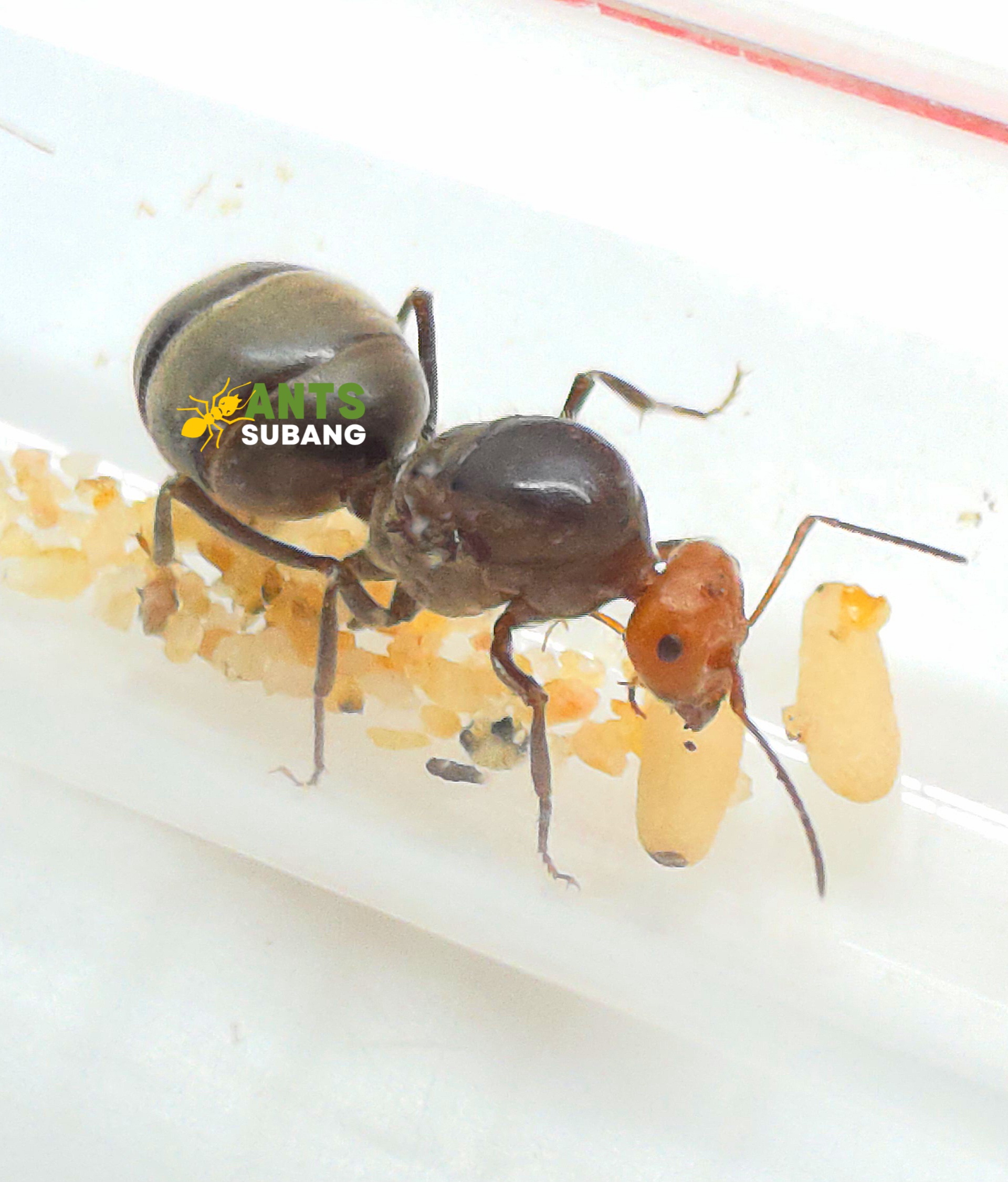
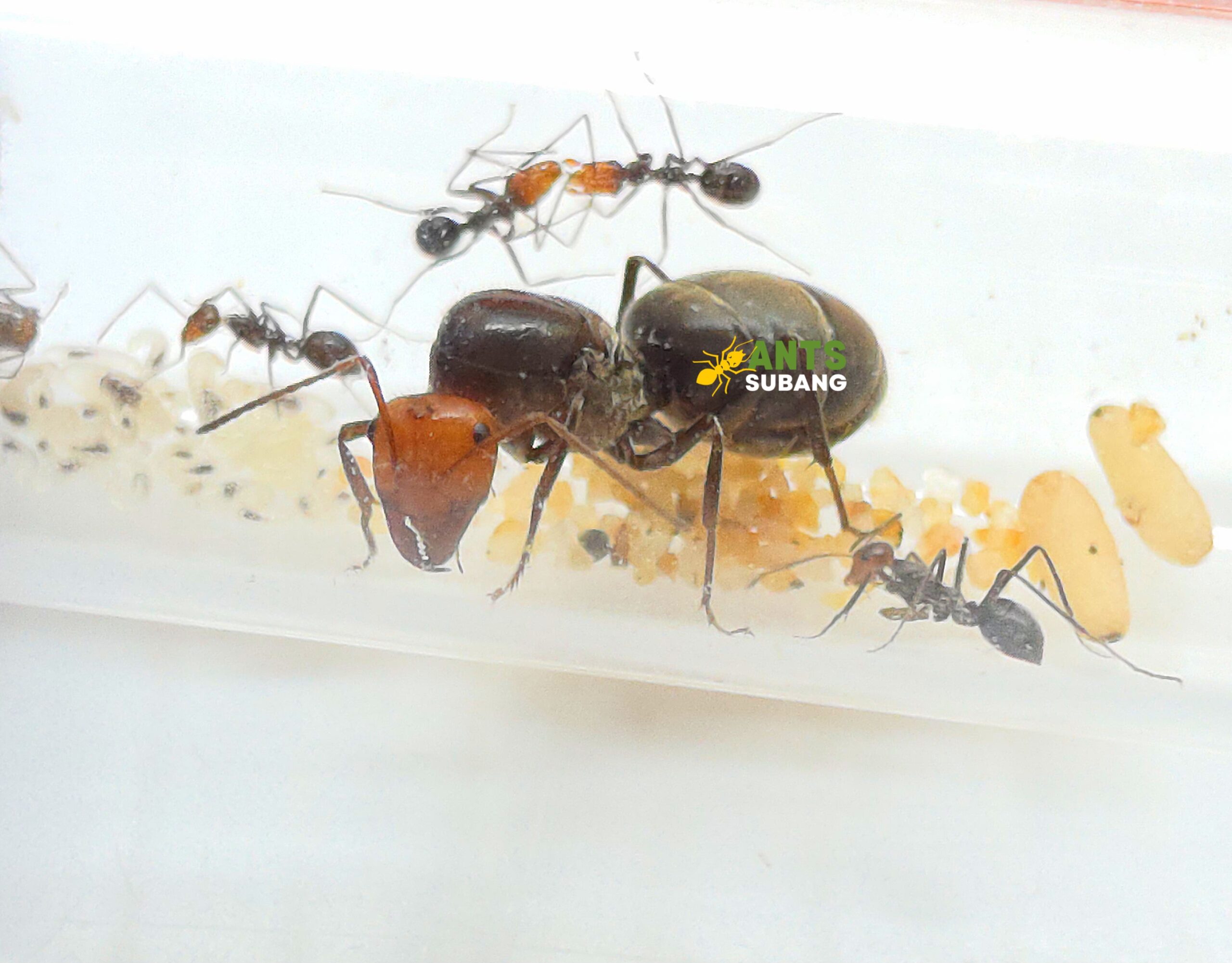
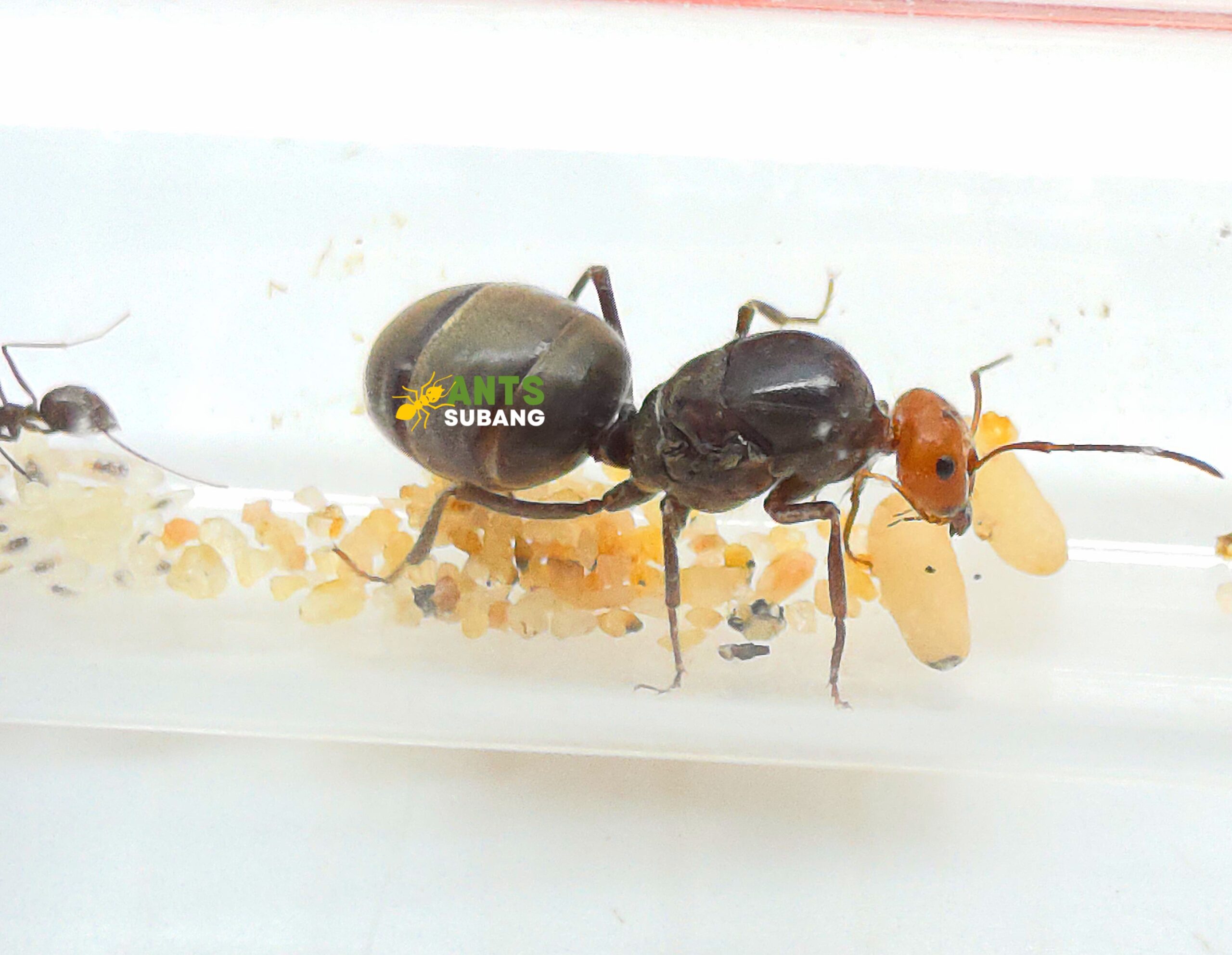
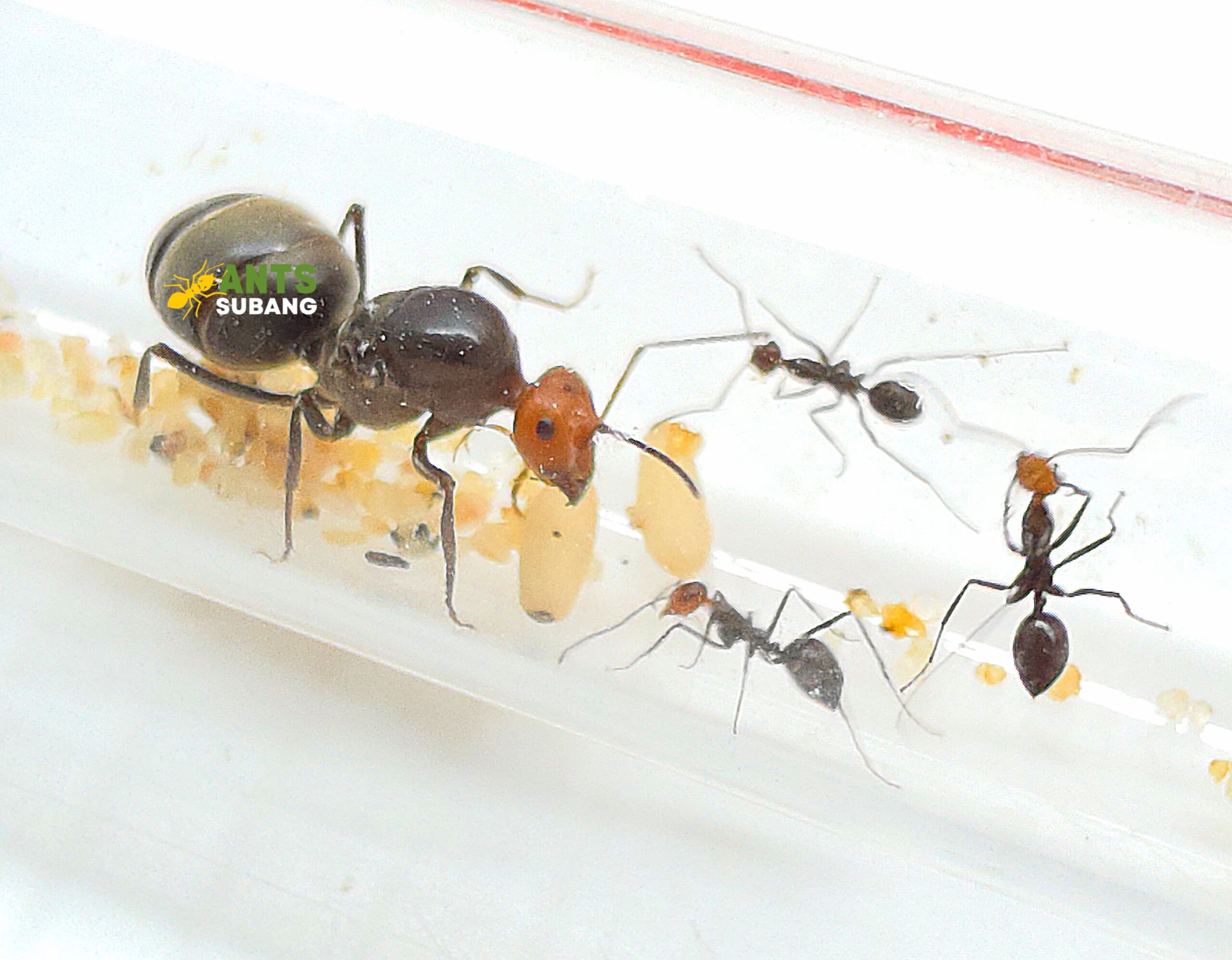
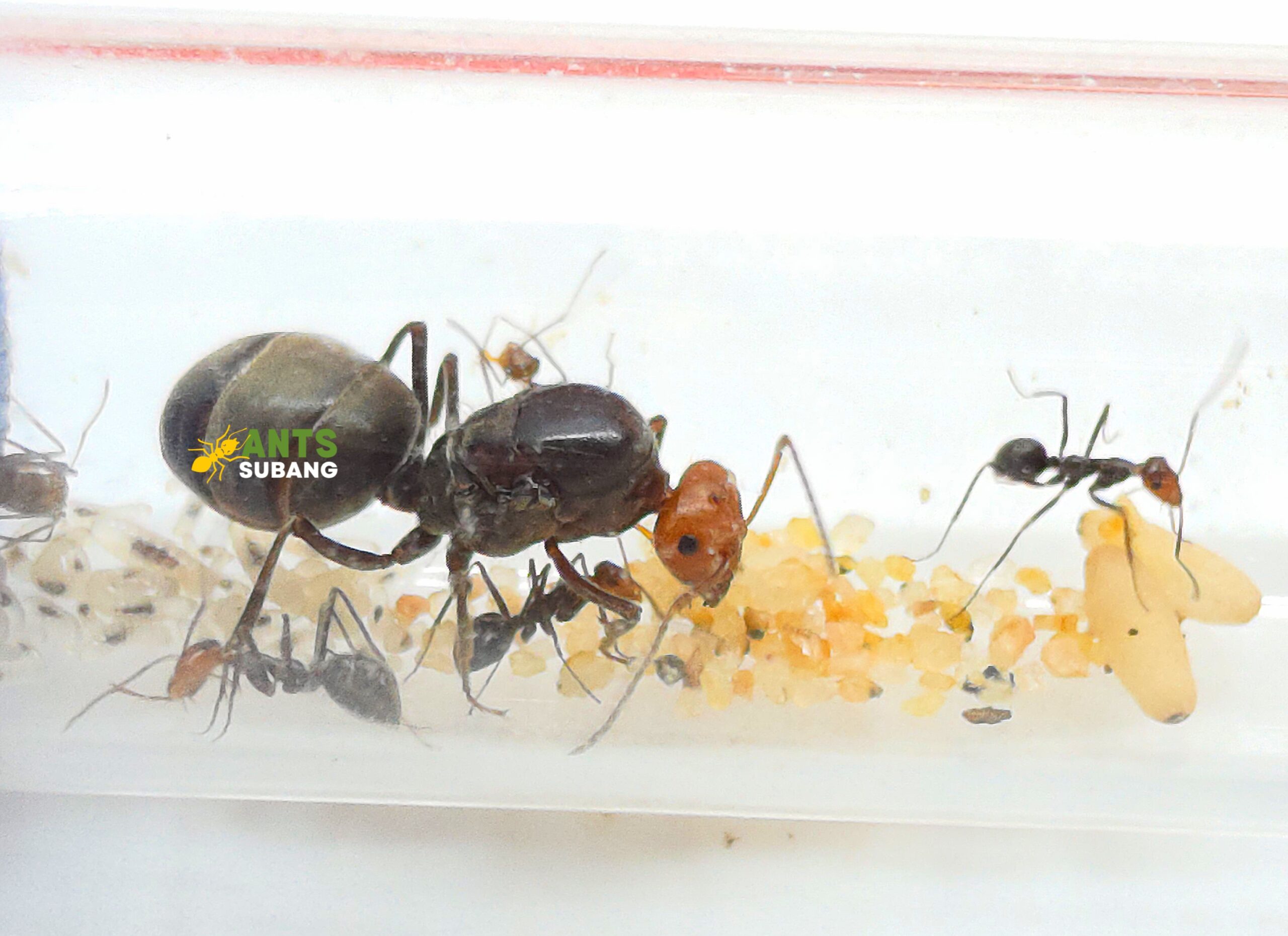
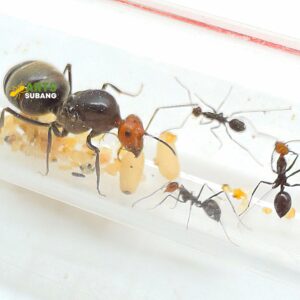
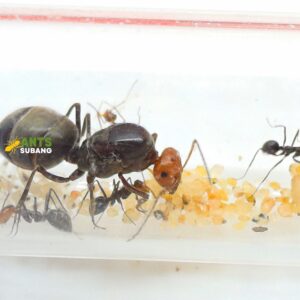
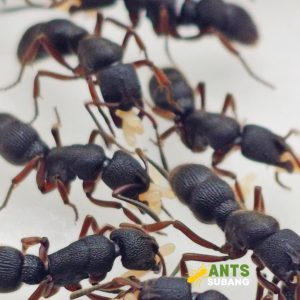
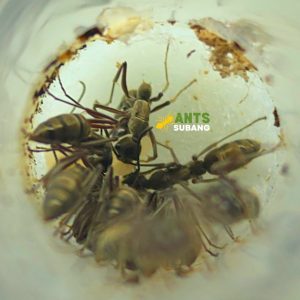
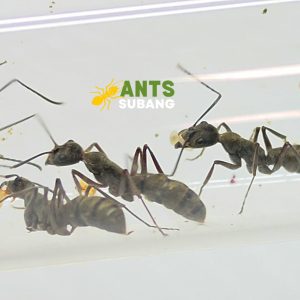
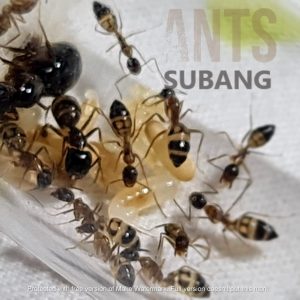
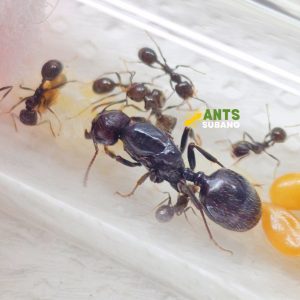
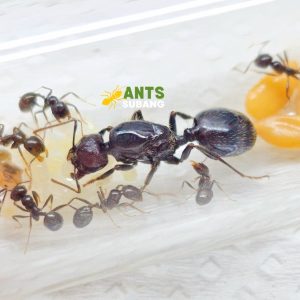
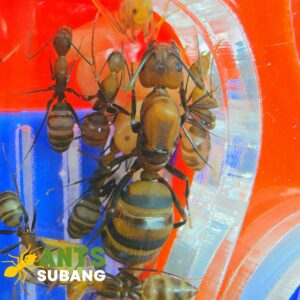
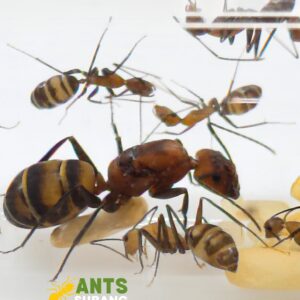
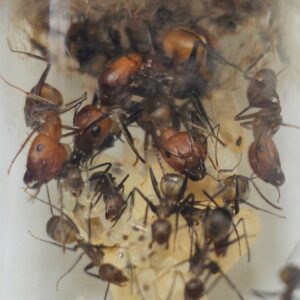
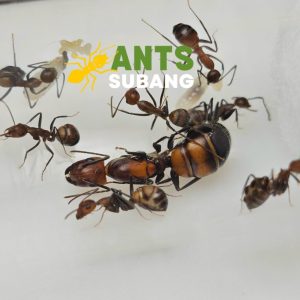
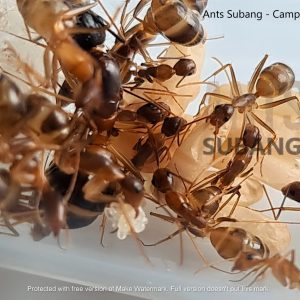
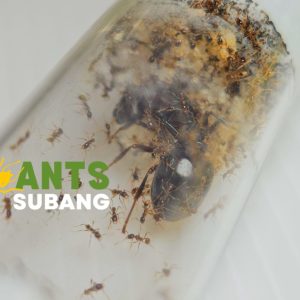
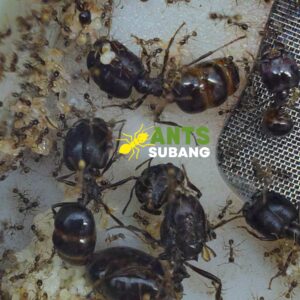
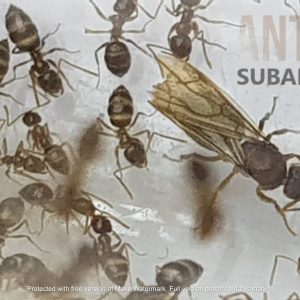
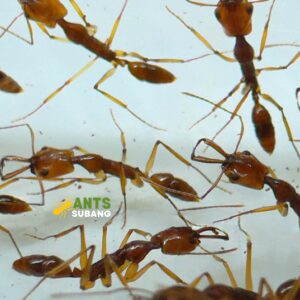
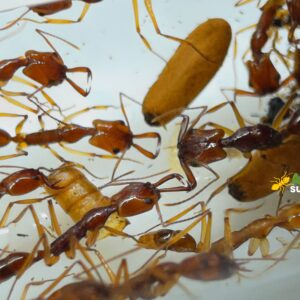
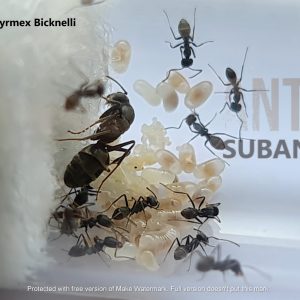
Myrmecocystus Placodops, also known as the bicolored giant honeypot ant, are among the largest honeypot ants and are a highly sought-after species for their dramatic repletes and striking red-and-black coloration . They are generally considered an intermediate-level species, but are very rewarding for keepers who can meet their specific needs.
WHAT YOU WILL GET:-
1 Colony – 1 x Queen + 5 to 10 Workers (current stocks)
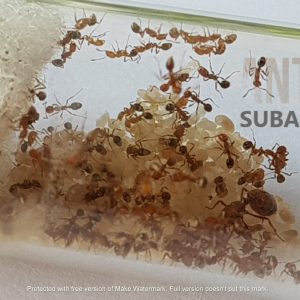
1 Colony – 1 Queen + 10 to 15 Workers (future stocks)
(All colonies are from founding queens, like most other ant colonies they are raised by Ants Subang)
Here is a comprehensive care guide based on the available information.
🐜 Basic Information & Difficulty
Species: Myrmecocystus placodops (Giant Honeypot Ant) .
Difficulty: Moderate to Hard . Not recommended for absolute beginners, Founding queens can be tricky, but colonies grow robustly once established.
Queen Size: Approx. 13 – 16 mm .
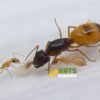
Worker Size: Approx. 5 – 10 mm; repletes are significantly larger.
Colony Form: Monogyne (one queen per colony)
Sting/Bite: No sting, but they can deliver a mild bite.
🌡️ Environment & Habitat
Temperature: This species is from the desert and requires consistent warmth. Provide a thermal gradient (a warm side and a cooler side) so the ants can regulate their own temperature.
Nest: 28°C
Arena (Outworld): Can be slightly warmer, 28 – 32°C
Humidity: They prefer dry conditions, which is critical for their health and to prevent mold. Overly humid environments can harm the colony . Provide a small hydrated zone and let the rest of the nest remain dry.
Nest: 30 – 50%
Arena: 20 – 40%
Diapause (Hibernation): Hibernation is not strictly required, and they can be kept active year-round if kept warm .
Recommended Formicarium: A desert-style formicarium with tall chambers is best. Repletes prefer to hang from the ceiling, so a nest with a textured or rough ceiling surface will help them grip and hang comfortably.
🍽️ Feeding & Diet
A two-part diet of liquid sugars and protein is essential.
Liquid Sugars (For energy and repletes): This is the cornerstone of their diet. Keep a constant source of sugar water, honey water, or commercially available ant nectar available at all times . Without steady sugar access, colonies can weaken quickly.
Protein (For brood development): Offer insects 2-3 times per week. Good options include fruit flies, crickets, mealworms, and roaches. They will lap up the the insects blood, which can also be stored in repletes .
⚠️ Key Care Tips & Potential Challenges
Repletes are Delicate: The replete workers are fragile. Avoid vibrations, shaking, or any disturbances to the nest that could injure them. Handle the formicarium with extra care .
Heat is Crucial: Growth will slow significantly if they are kept too cool. Consistent, stable warmth is one of the most important factors for success .
Start Small: When a colony is young, keep it in a small nest or test tube setup. Moving them into a formicarium that is too large too soon can cause stress and lead to colony failure .
Stable Conditions: Honeypot ants thrive on stability. Sudden changes in temperature, humidity, or frequent nest disruptions can cause stress and may lead to a colony crash .
💎 Summary: Key to Success
Consistent Heat: Maintain a warm environment with a temperature gradient.
Constant Sugar: Provide a steady supply of liquid sugars.
Dry Conditions: Keep humidity low
Patience & Gentleness: Minimize vibrations and disturbances, especially once repletes start to form.
With stable care, Placodops colonies can grow to impressive sizes, potentially reaching 1,000+ workers in just a few years


Reviews
There are no reviews yet.