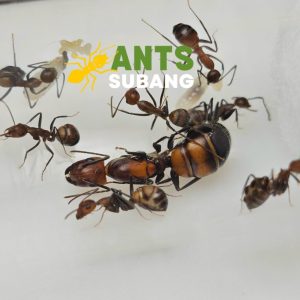
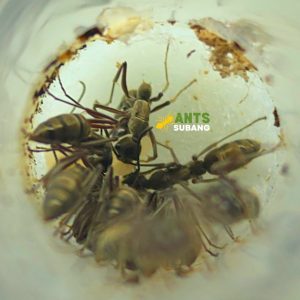
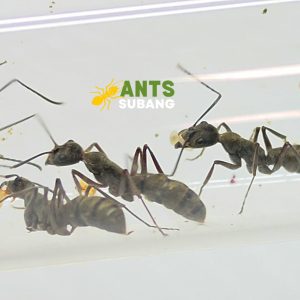
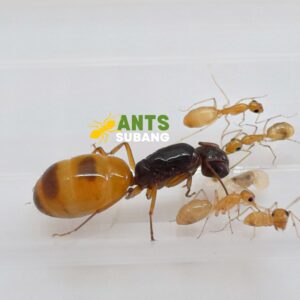
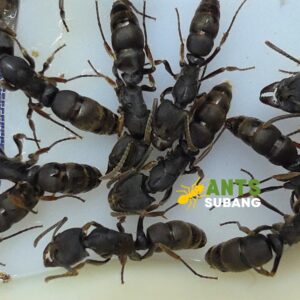
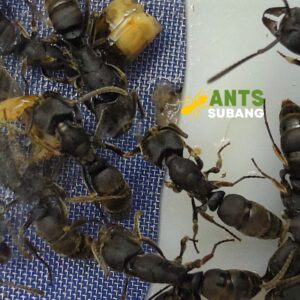
Solenopsis Sp. (Fire Ants)
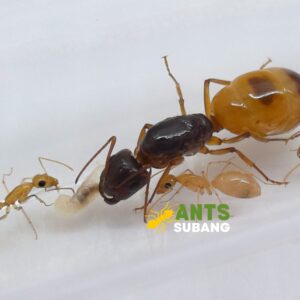
Very aggressive and a popular species to keep. Always very hungry and ready to attack. They grow extremely fast if given proper care. May not be advisable for your first ant colony.
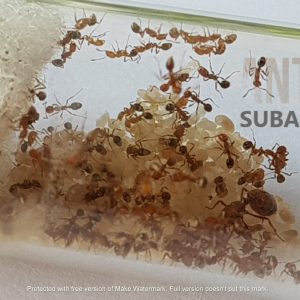
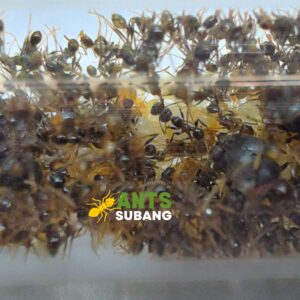
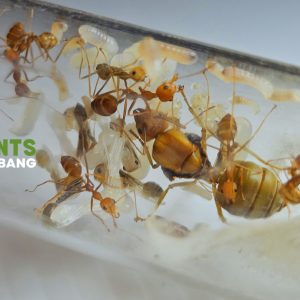
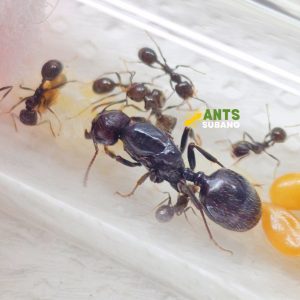
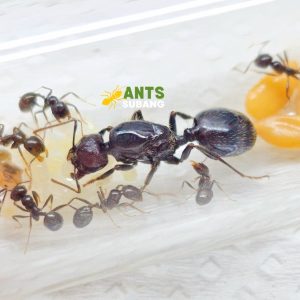
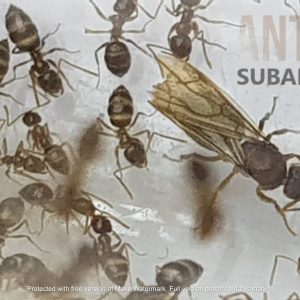
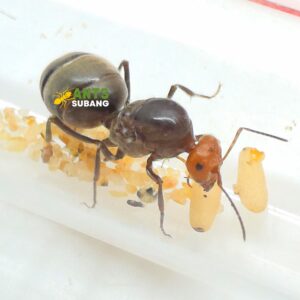
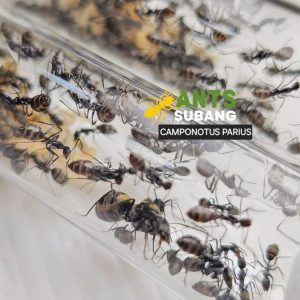
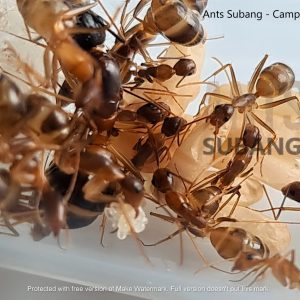
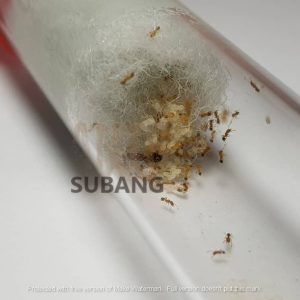
What you will get : A Colony of fire ants (will not know the species unless under a microscope) with 20 to 30 workers (can be more) housed in a glass test tube.
| Attribute | Solenopsis invicta (Red Imported) | Solenopsis geminata (Tropical Asian) |
|---|---|---|
| Difficulty | Expert (5/5) | Intermediate to Advanced |
| Queen Size | 8 – 10 mm | 6 – 10 mm |
| Worker Size | 2 – 6 mm (polymorphic) | 3 – 6 mm (polymorphic) |
| Colony Form | Monogyne or Polygyne | Monogyne or Polygyne |
| Growth Rate | Extremely Fast (5/5) | Very Fast (5/5) |
| Hibernation | None (active year-round) | None |
⚠️ CRITICAL WARNING: Not a Beginner Species
Fire ants are among the most challenging and dangerous species in the ant-keeping hobby. They are not recommended for beginners . They possess a potent stinger and will not hesitate to use it, delivering a painful, burning sting that can cause severe allergic reactions in some individuals . You will be stung regularly when maintaining their enclosure .
🌡️ Environment & Setup
Fire ants are tropical species that require warm, humid conditions to thrive .
Temperature:
NEST: 26-30°C .
Humidity: Nest 60-80%
Escape Prevention is Paramount:
Fire ants are notorious “escape artists” . They can squeeze through tiny gaps and chew through soft materials .
Critical: Use a good anti escape barrier on all outworld walls .
House them in high-density acrylic or specialized gypsum nests with secure seals . Avoid soft materials they can chew through.
Nest Type: They are adaptable and will nest in soil, acrylic, grout or other materials . They are master excavators .
🍽️ Feeding & Nutrition
Fire ants have an insatiable appetite and require constant feeding to sustain their explosive growth .
Protein (Essential): Provide a constant supply of freshly killed insects—crickets, roaches, mealworms, and fruit flies . Larvae are fed solid protein by workers .
Carbohydrates: Provide honey water, sugar water
Diet Note: They are generalist omnivores and will also consume oily and fatty foods . They may need to be fed almost daily as the colony grows .
Hydration: Ensure a constant source of fresh water is available, but be aware they may attempt to fill water sources with debris .
🐜 Behavior & Colony Dynamics
Aggression: They are highly territorial and aggressively attack anything that moves near their nest . Their recruitment is legendary; a food source can be covered by a “boiling mass” of workers within seconds .
Defense: They bite to gain leverage and then sting repeatedly, injecting an alkaloid venom that causes a burning sensation and often results in pustules .
Colony Size: Can reach enormous populations, sometimes exceeding 100,000 to 250,000 workers in a single colony . Some species can form “super-colonies” .
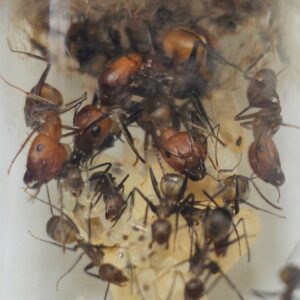
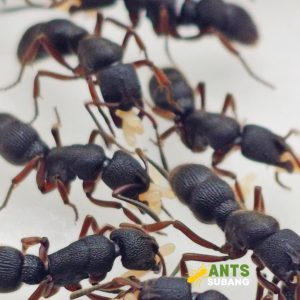
Polymorphism: Workers vary in size, with majors (large-headed soldiers) present .
Special Behaviors: They are famous for their “rafting” behavior—linking their bodies together to form a floating ball to survive floods .
🚨 Ethical & Legal Considerations
Extreme Invasive Risk: Solenopsis species, particularly S. invicta, are among the world’s most destructive invasive pests . They displace native species and damage ecosystems and agriculture .
Do Not Release: Never, under any circumstances, release a fire ant colony into the wild. If you can no longer keep them, they must be humanely euthanized . Returning them to nature is an extremely bad idea and can cause immense ecological harm .
⚠️ Safety Warning for Keepers
Stings: Be prepared to be stung regularly during maintenance . Some people can develop life-threatening anaphylactic shock from repeated stings .
Maintenance: Because they grow so explosively, have a plan for rapid expansion before you even start . You may need to manage population growth by restricting their food intake .


Reviews
There are no reviews yet.