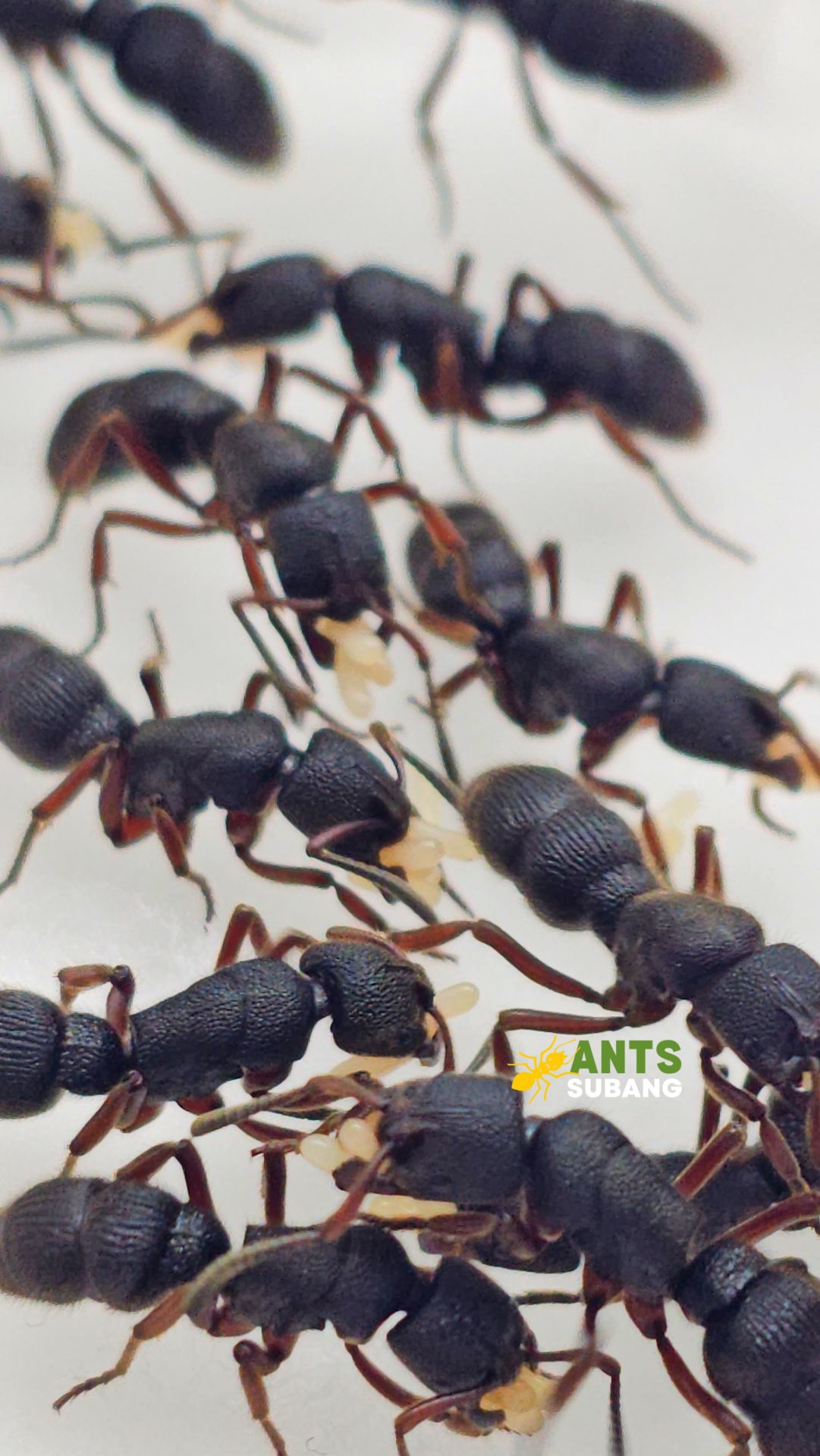
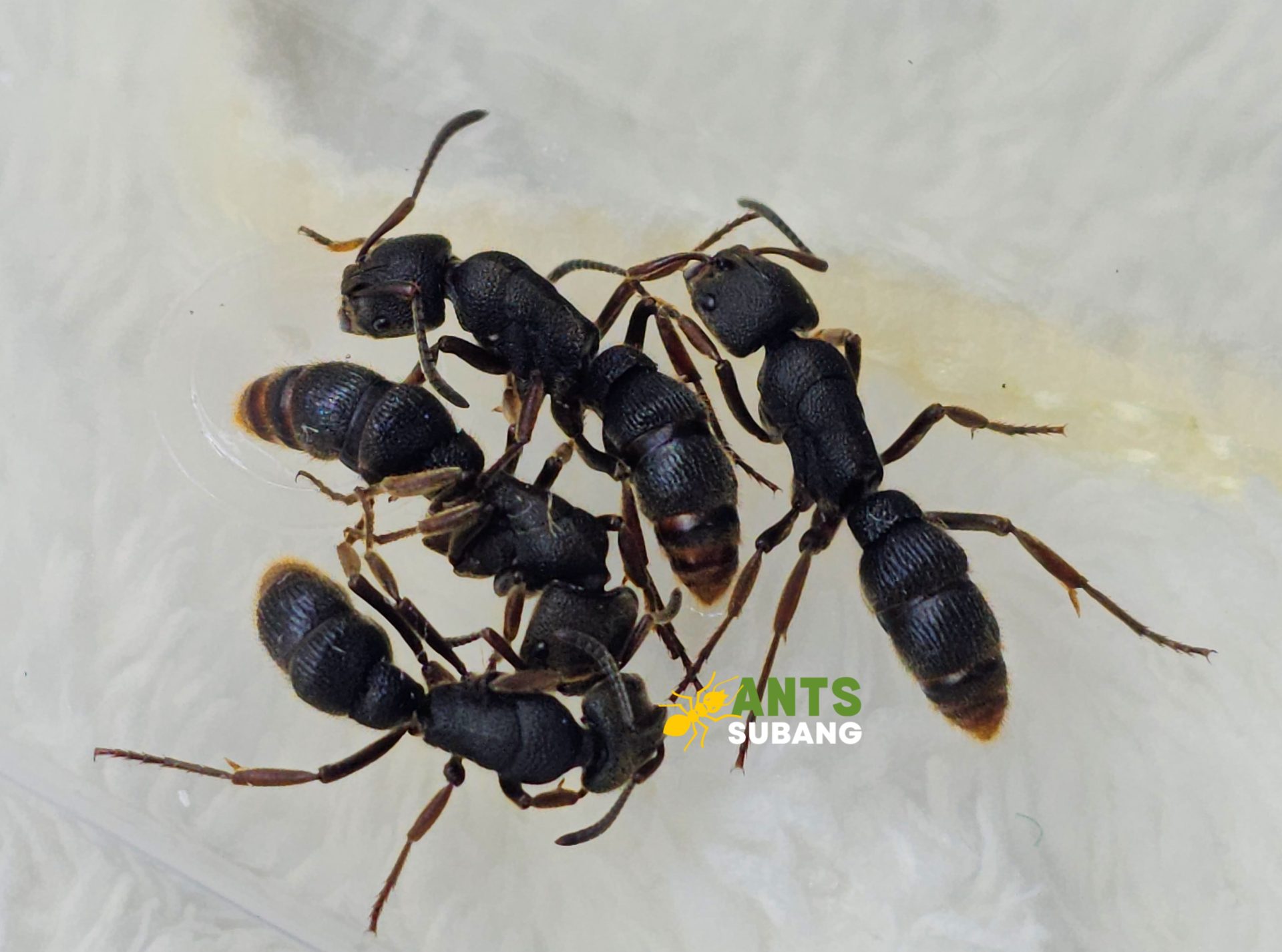
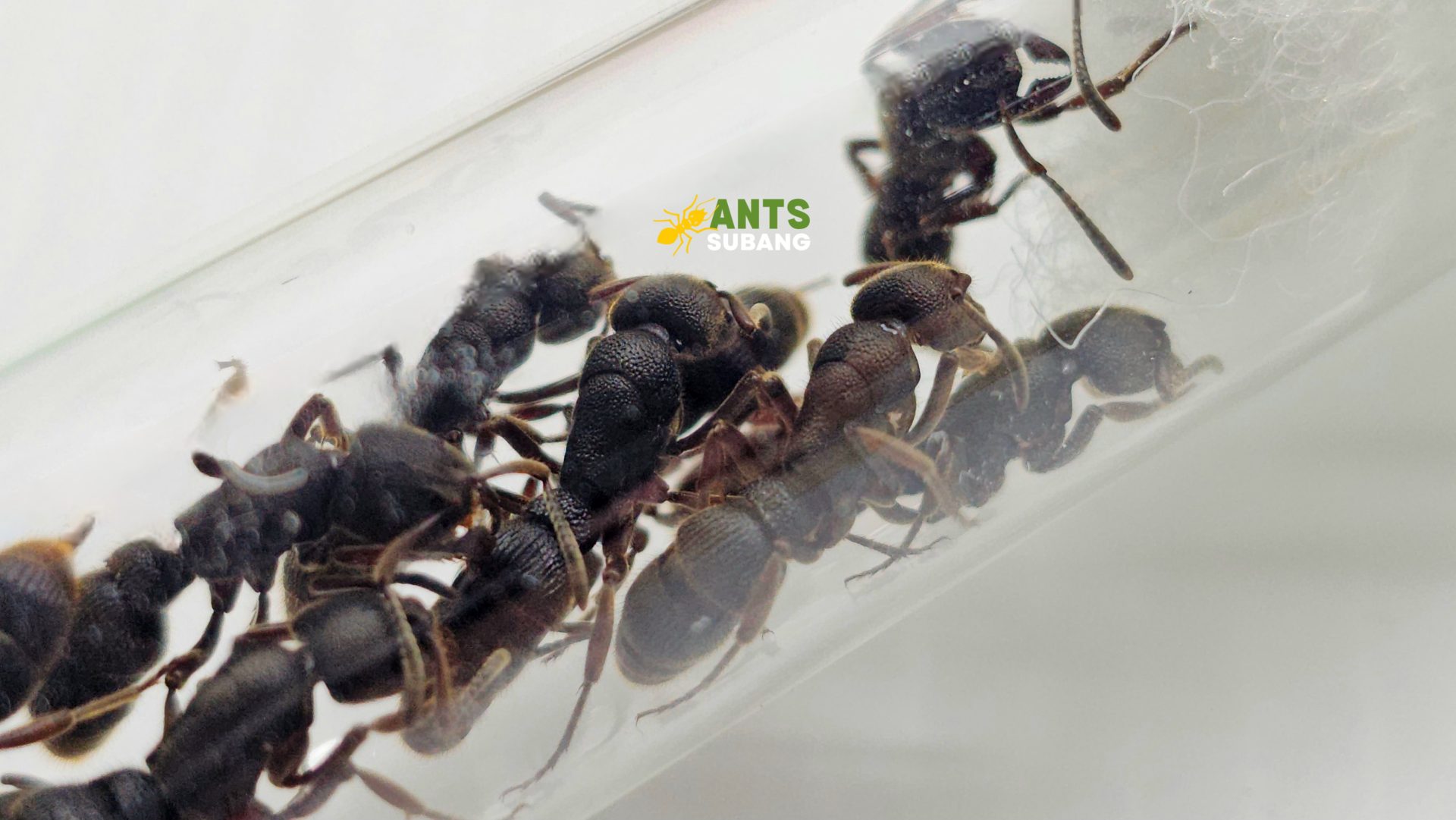
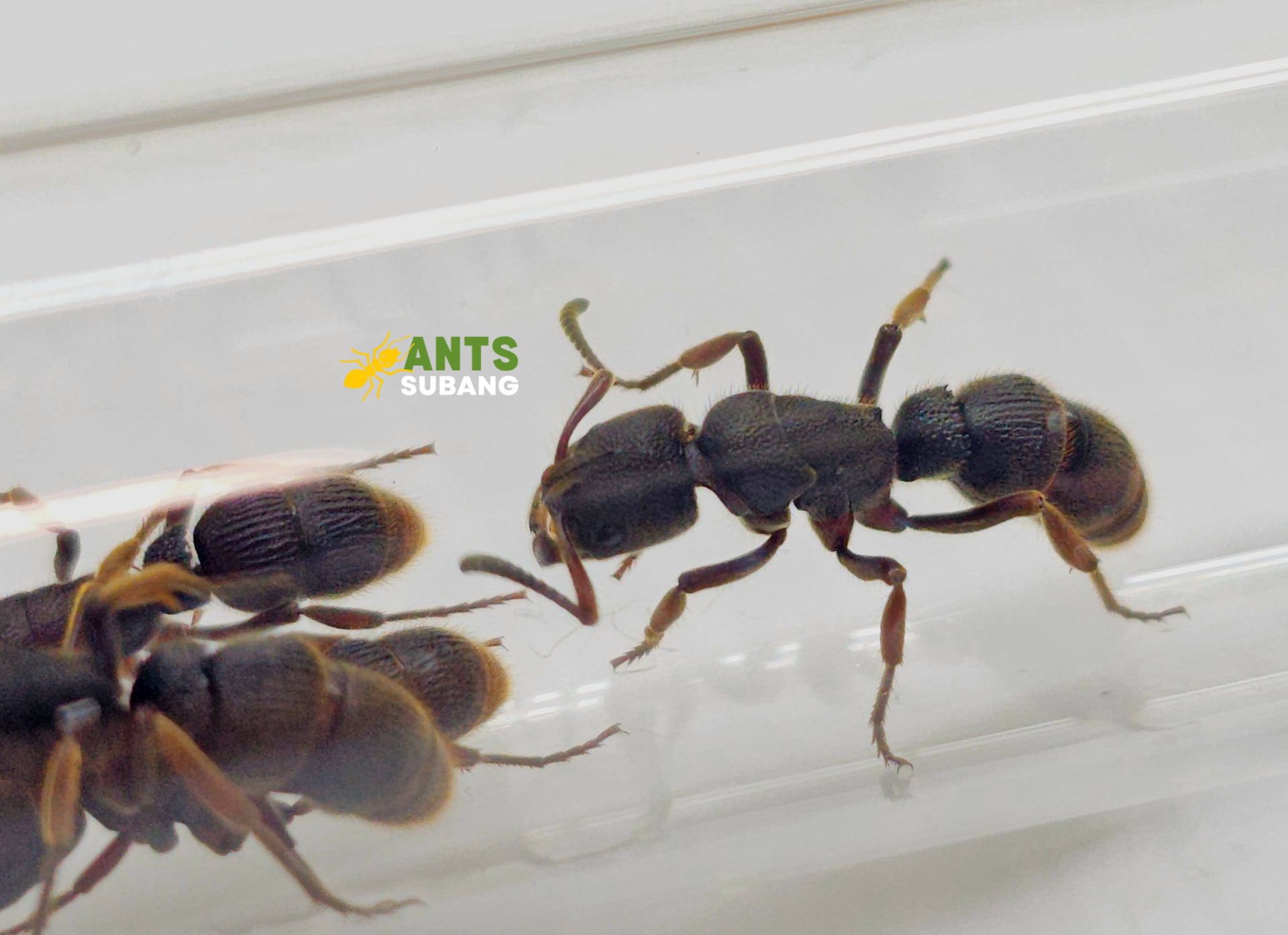
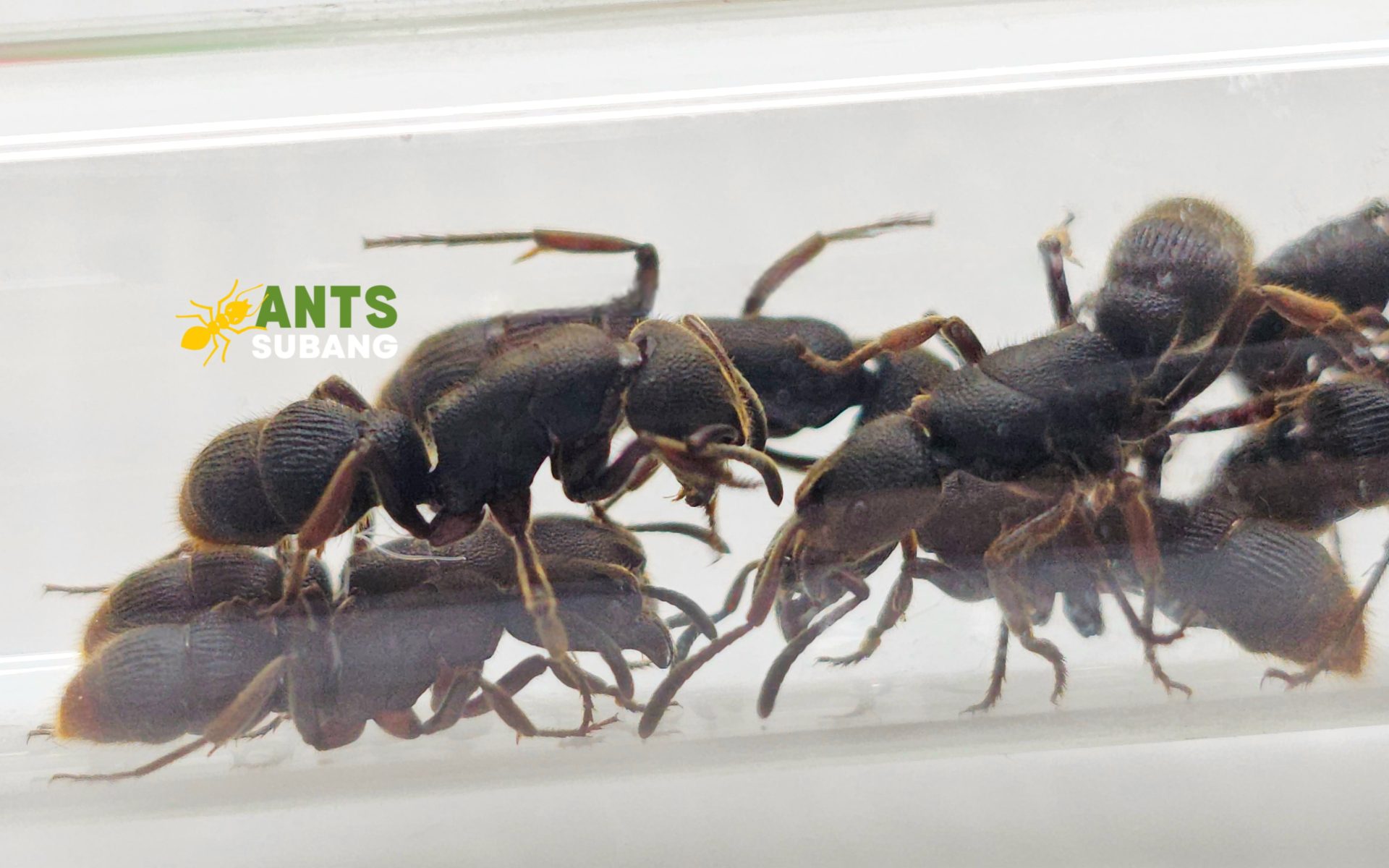
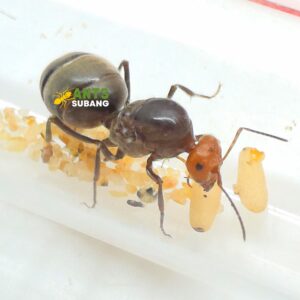
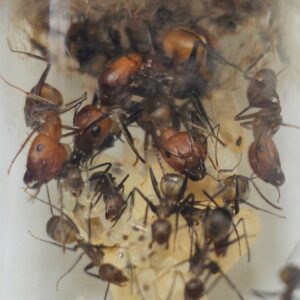
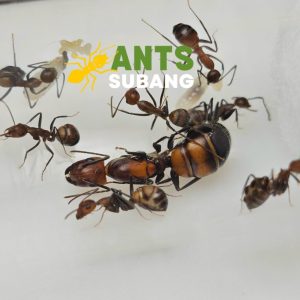
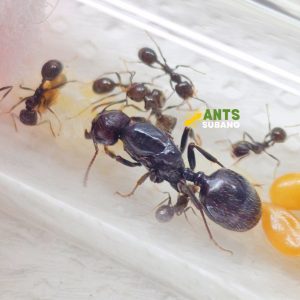
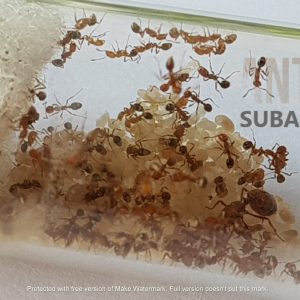
PSEUDONEOPONERA RUFIPES
Caring for a Pseudoneoponera rufipes colony is an exciting journey into the world of tropical ponerine ants. They have a cool ability: they can shoot a foamy chemical from their stingers. They use it to attack, defend, or stop other insects. They can’t climb slippery surfaces like glass or acrylic, so it’s best to keep them in a closed terrarium to keep the humidity high. They are a unique, manageable species with fascinating behaviors, but they do have specific requirements that differ from more common ants .
What you will get:-
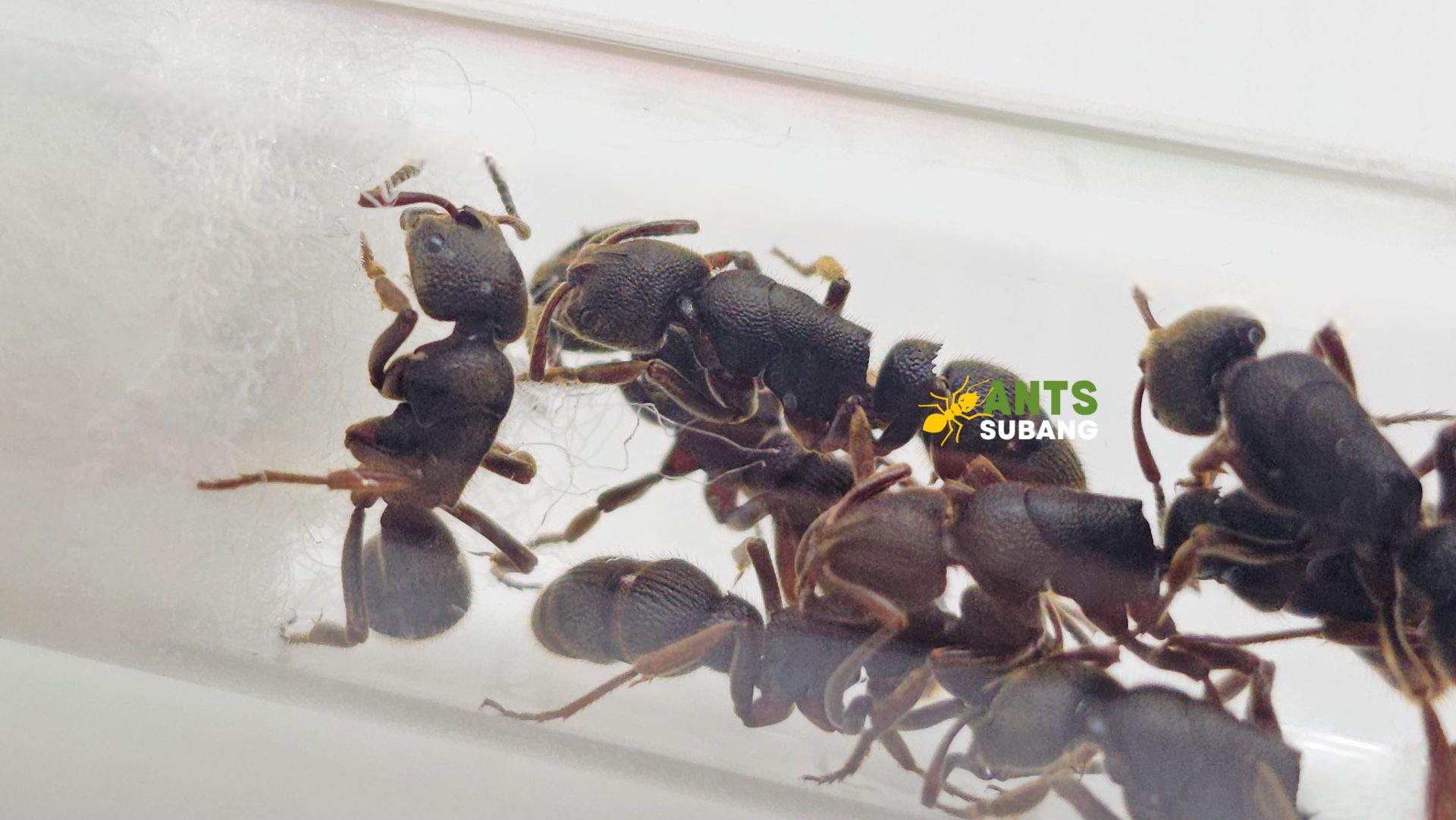
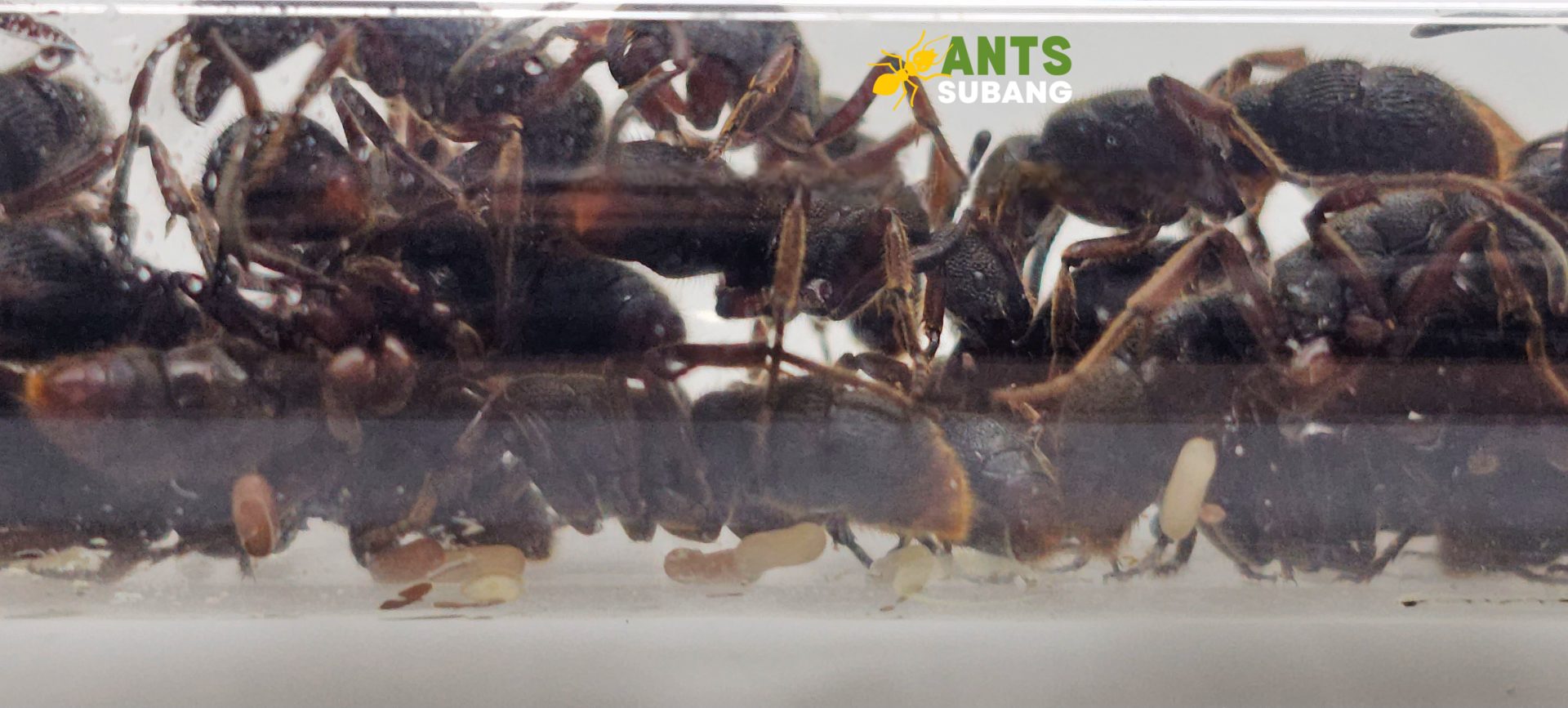
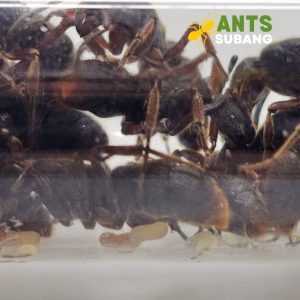
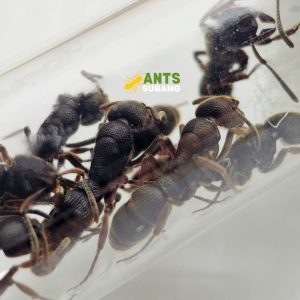
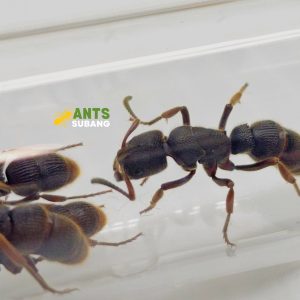
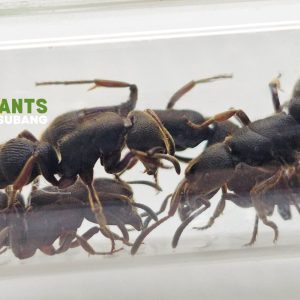
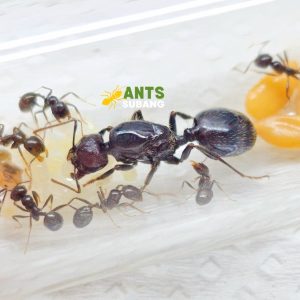
Pseudoneoponera Rufipes Ant Colony x 1
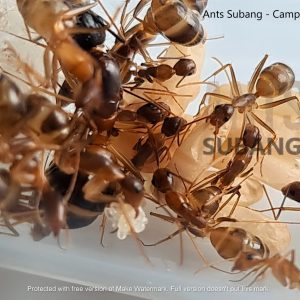
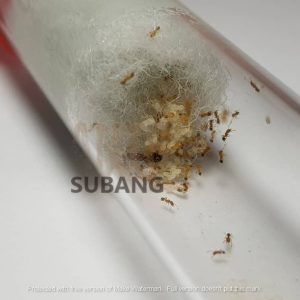
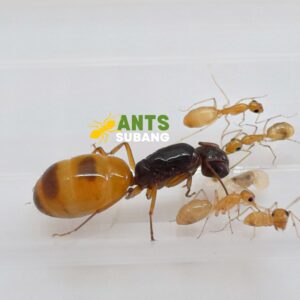
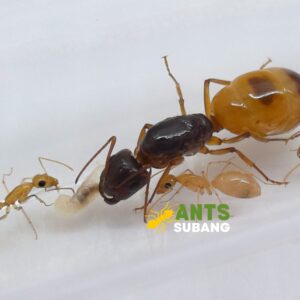
1 Mated Gamergate – 10 to 20 workers
18mm x 150/200mm L Test tube
Here is a quick overview of their basic care requirements to get you started:
| Aspect | Recommendation |
|---|---|
| Temperature | Nest: 26-28°C |
| Humidity | Nest: 60-80% |
| Queen Type | Gamergate – Mated Worker ant |
| Colony Size | Small to medium, usually 20-200 workers . |
| Difficulty | Hard |
| Sting/Pain | Yes, Be cautious and avoid direct handling . |
🏠 Housing and Environment
Creating the right environment is crucial for the health of your P. rufipes colony.
-
Nest Choice: In the wild, they nest in soil, often in pre-existing cavities or under fallen logs . In captivity, they adapt well to naturalistic setups. A popular option is an ant farm or formicarium filled with a rainforest soil mix . This allows them to dig and construct their nest naturally. A soil-based setup is often preferred for this species.
-
Escape Prevention: A key advantage of P. rufipes is that they cannot climb smooth, vertical surfaces like glass or plastic . This means you don’t need a complex barrier like fluon or talcum powder for the arena.
🌡️ Climate Control
Maintaining stable tropical conditions is vital for the colony’s growth and well-being.
-
Temperature: Keep the nest area consistently warm, between 26-28°C .
-
Humidity: High humidity in the nest is critical, especially for brood development. Low humidity can cause eggs to fail to develop and larvae to stop growing . Regularly moisten the substrate, but avoid making it waterlogged.
🥗 Feeding
P. rufipes are primarily predators and scavengers. Providing the right nutrition is key.
-
Primary Food – Protein: Their diet should consist mainly of insects. They strongly prefer pre-killed or freshly-killed prey . Good options include crickets, mealworms, roaches, and flies. You can use live insects, but note that P. rufipes can be somewhat clumsy hunters due to their poor eyesight, so they may not catch fast-moving prey effectively .
-
Secondary Food – Sugars: While they primarily hunt for protein, they will also accept sugar sources.
-
Feeding Schedule: Offer protein 1-3 times a week, depending on colony size. Remove any uneaten food after a few days to prevent mold and mites .
🐜 Understanding Colony Dynamics
-
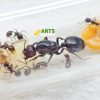
Gamergates: One of the most interesting features of this species is that in the absence of a queen, some workers (called gamergates) can mate and lay fertile eggs to sustain the colony.
-
Defense Mechanism: P. rufipes has a unique defense: when threatened, they can release a foamy, thread-like secretion from the tip of their abdomen. This foam acts as a physical trap for small enemies like other ants .
-
Activity Level: Don’t be surprised if your colony seems inactive during the day. They are primarily nocturnal or crepuscular, meaning they are most active at night and during twilight hours . This is normal behavior.
💡 Key Tips for Success
-
Patience is a Virtue: This species develops very slowly. The time from egg to adult can take 3-4 months, so don’t worry if you don’t see rapid growth .
-
Provide Cocooning Material: If you keep them in an artificial nest, ensure that each chamber has some fine substrate like sand or fine soil. The larvae need this material to build a cocoon for pupation; without it, they will die .
-
Avoid Overfeeding: Feed small amounts to prevent food from spoiling, which can attract mites and other pests .
-
Start with a Small Colony: Beginning with a young, small colony is a great way to learn their specific needs and watch them grow from the start .
Caring for Pseudoneoponera rufipes is a rewarding experience for dedicated ant keepers. Their manageable colony size, unique natural history, and fascinating behaviors make them a standout species to observe.


Reviews
There are no reviews yet.