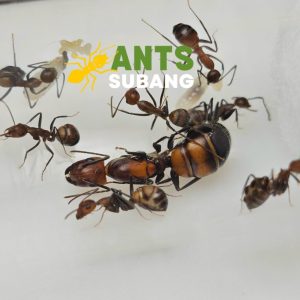
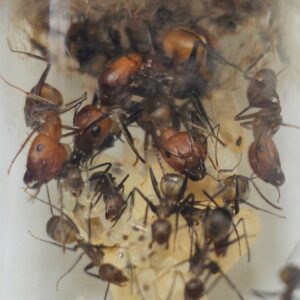
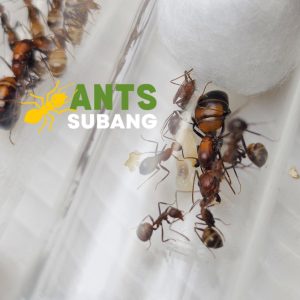
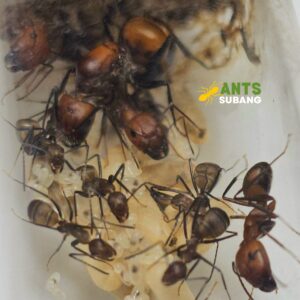
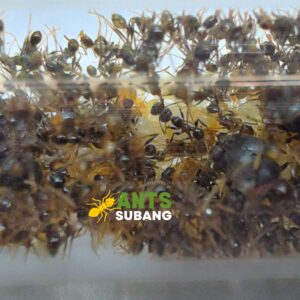
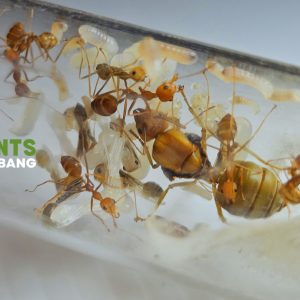
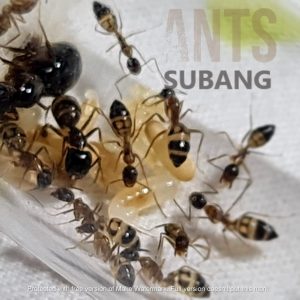
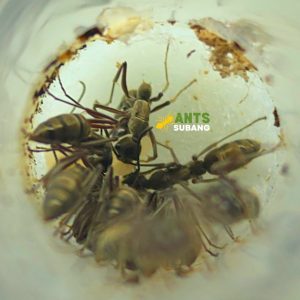
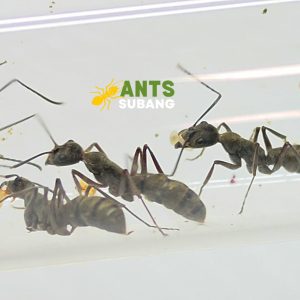
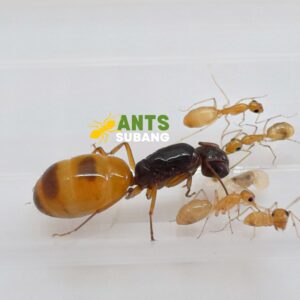
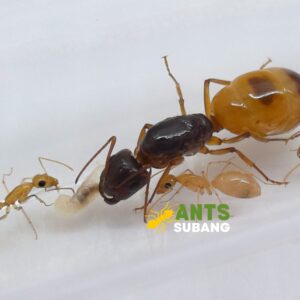
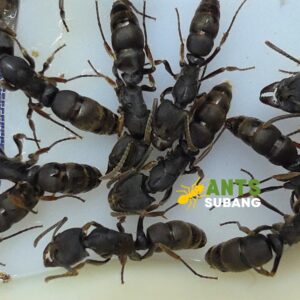
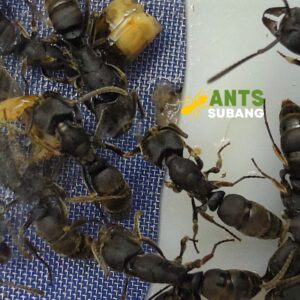
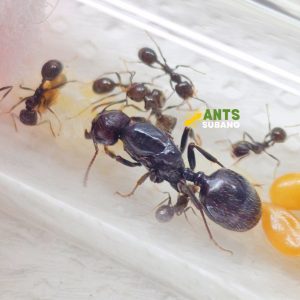
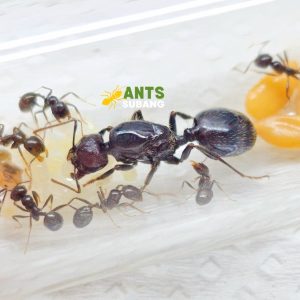
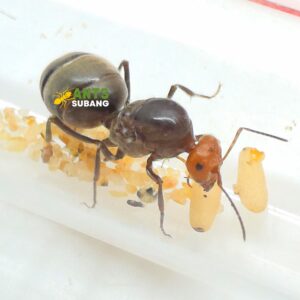
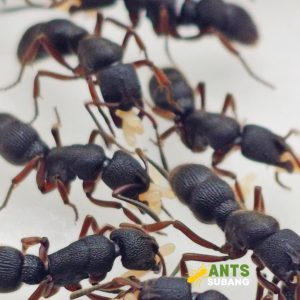
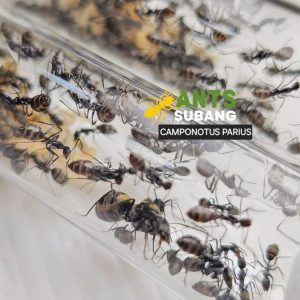
The Camponotus nicobarensis is a strikingly elegant and robust carpenter ant species, highly favored in ant keeping for its glossy dark body contrasted by often reddish-orange legs and antennae, as well as its dynamic behavior featuring a clear hierarchy of minor, media, and major workers with powerful mandibles. Native to Southeast Asia, this adaptable cavity-nester thrives in various environments from soil to hollow wood and is renowned in captivity for its rapid colony growth, high activity levels, and hardy nature, offering a mesmerizing window into the complex, bustling society of a fast-growing ant metropolis.
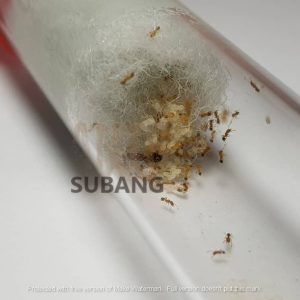
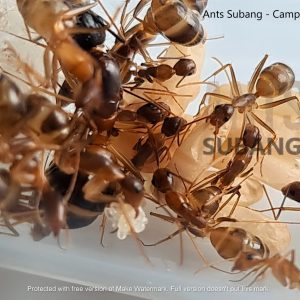
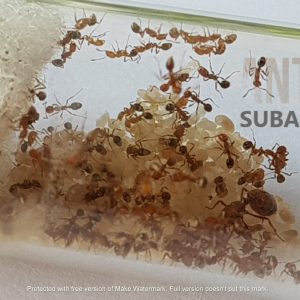
What you will get: A colony of Camponotus Nicobarensis with 5 to 10 workers (can be more depending on available stocks) housed in a glass test tube.
📋 Quick Reference Sheet
| Attribute | Detail |
|---|---|
| Scientific Name | Camponotus nicobarensis |
| Difficulty | Beginner-friendly (1-2/5) |
| Queen Size | 12 – 16 mm |
| Worker Size | 5 – 13 mm (polymorphic, including major soldiers) |
| Colony Form | Polygyne (can have multiple queens) |
| Growth Rate | Fast (4/5) |
| Hibernation | None (active year-round) |
🌡️ Environment & Setup
Creating the right environment is key for a thriving colony, but they are quite tolerant of variations .
Temperature:
Nest: 24 – 28°C .
Optimal: 27 – 29°C .
Humidity:
Nest: 50 – 70% .
Nest Type: They prefer to nest in dead wood . A cork or natural wood nest is highly recommended and well-accepted . They will also adapt to acrylic, plaster, or 3D-printed nests .
🍽️ Feeding
This species has a high food requirement but is not fussy.
Protein: A protein-rich diet is essential for growth. Offer insects like fruit flies, crickets, mealworms, dubia roaches. It is best to offer freshly-killed insects rather than live ones that can fight back.
Carbohydrates/Sugar: They love sugars. Provide honey water, sugar water, beetle jelly, or specialized ant nectar .
Hydration: Ensure fresh water is always available in a safe form (e.g., a test tube reservoir or a special feeder) to prevent drowning .
🐜 Behavior & Important Notes
Activity: This is a primarily nocturnal species, though larger colonies can often be seen active during the day . High activity during the day can sometimes indicate a shortage of food .
Defense: They do not possess a sting and are not known for a painful bite. Their main defense is the ability to spray formic acid. They are also known for a unique behavior: when alarmed, they tap their gasters (abdomen) against the nest, creating an audible sound to alert other workers .
Temperament: They are known to be quite hardy and not particularly aggressive towards keepers .


Reviews
There are no reviews yet.