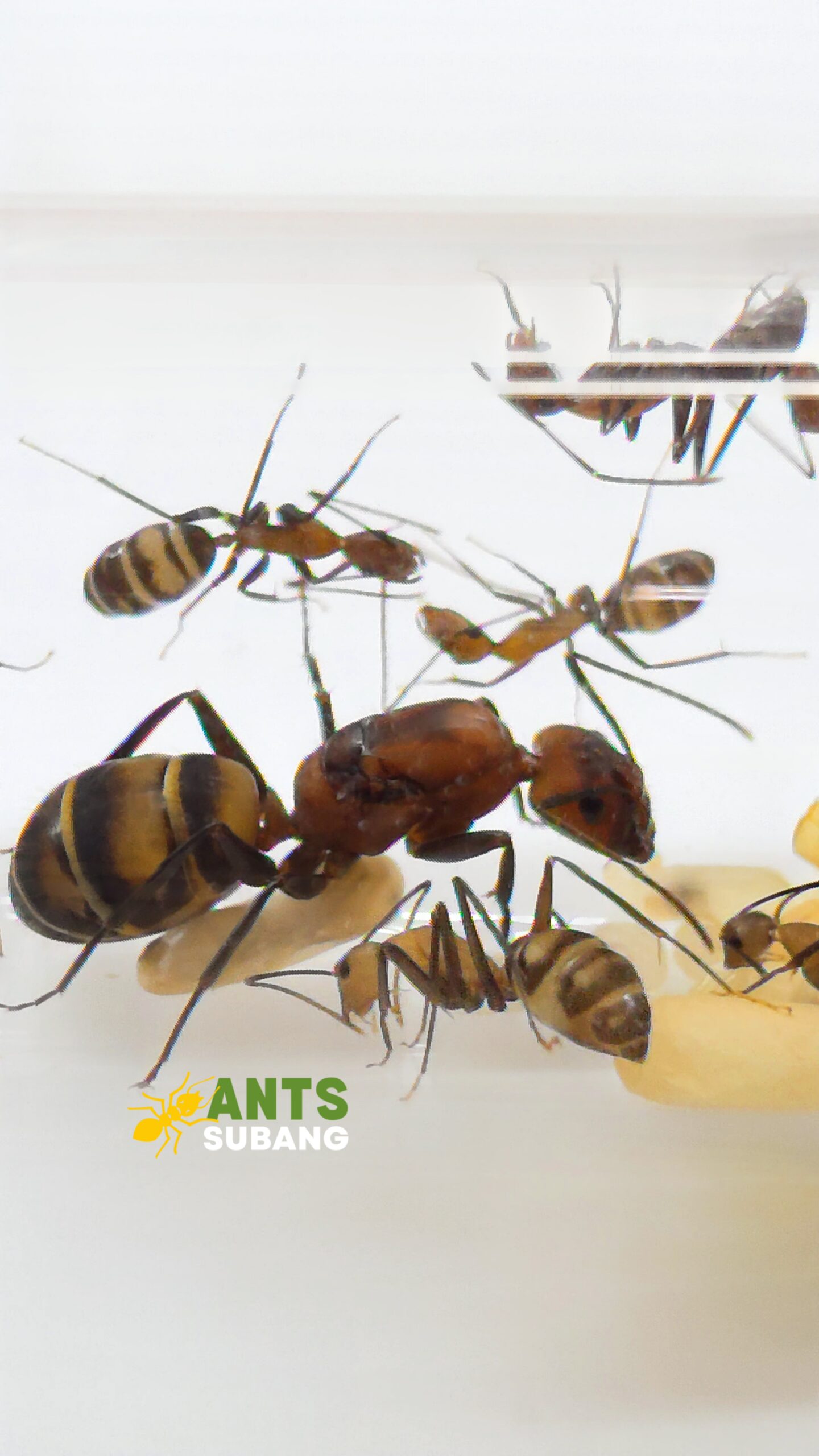
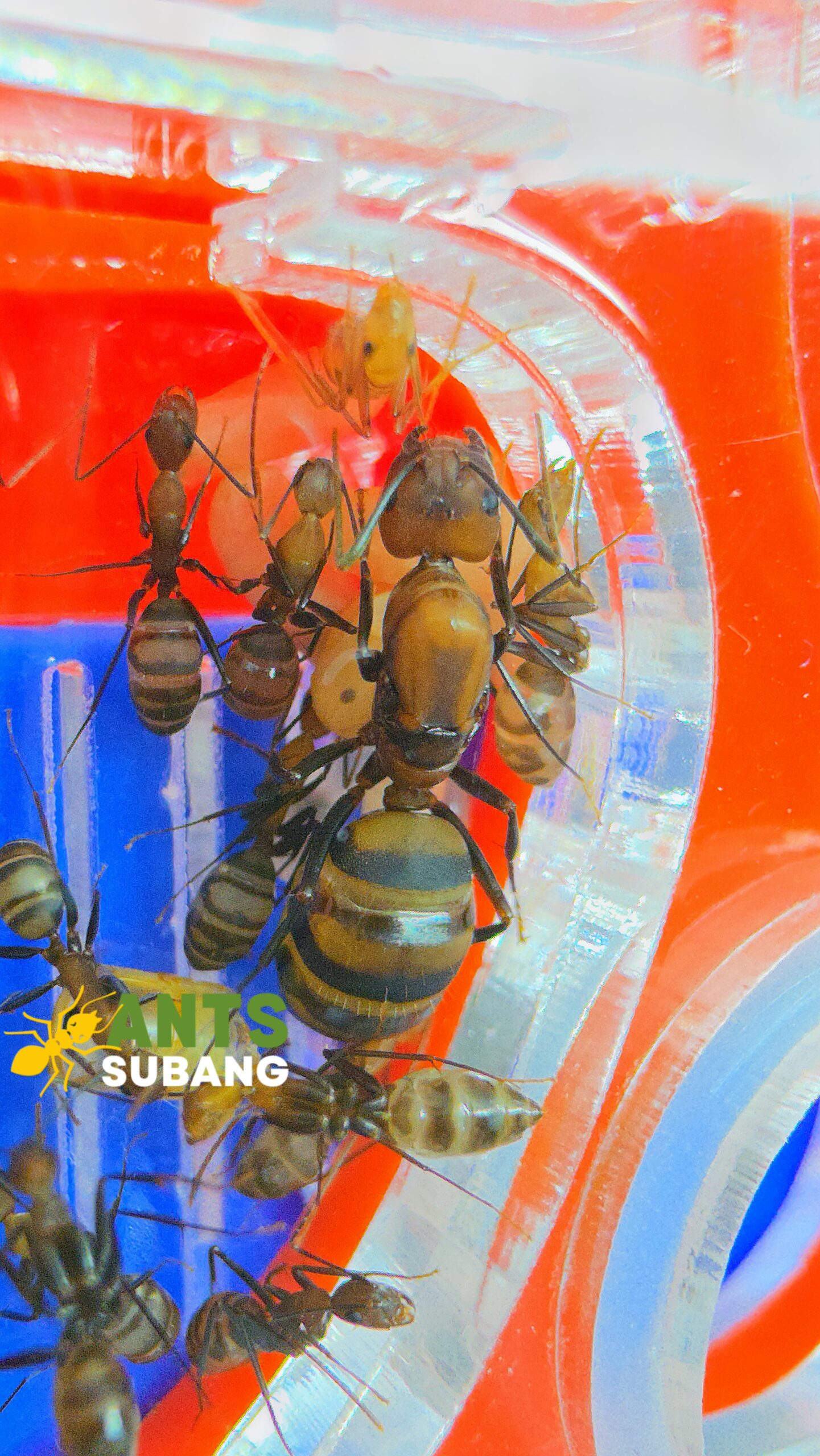
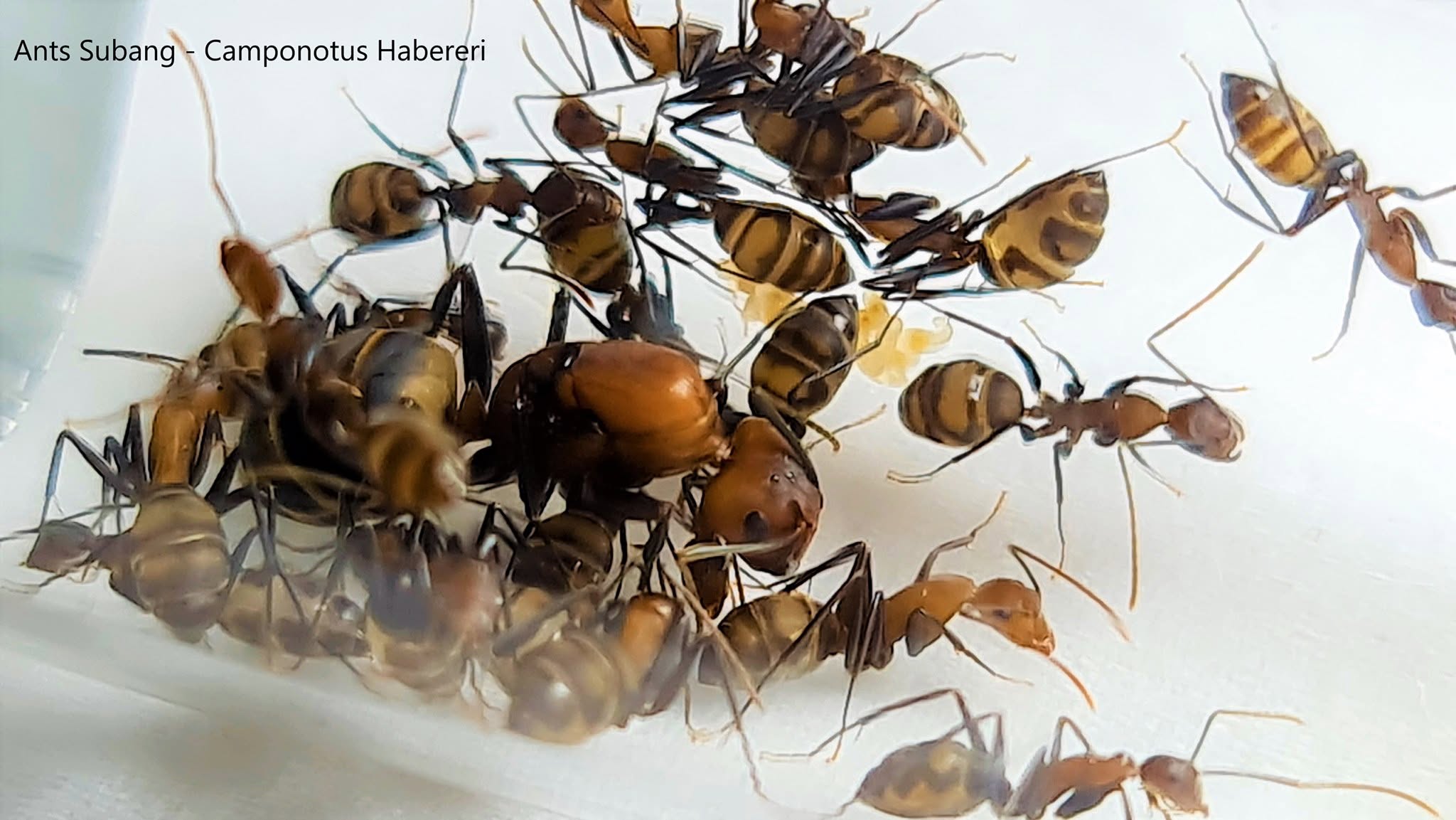
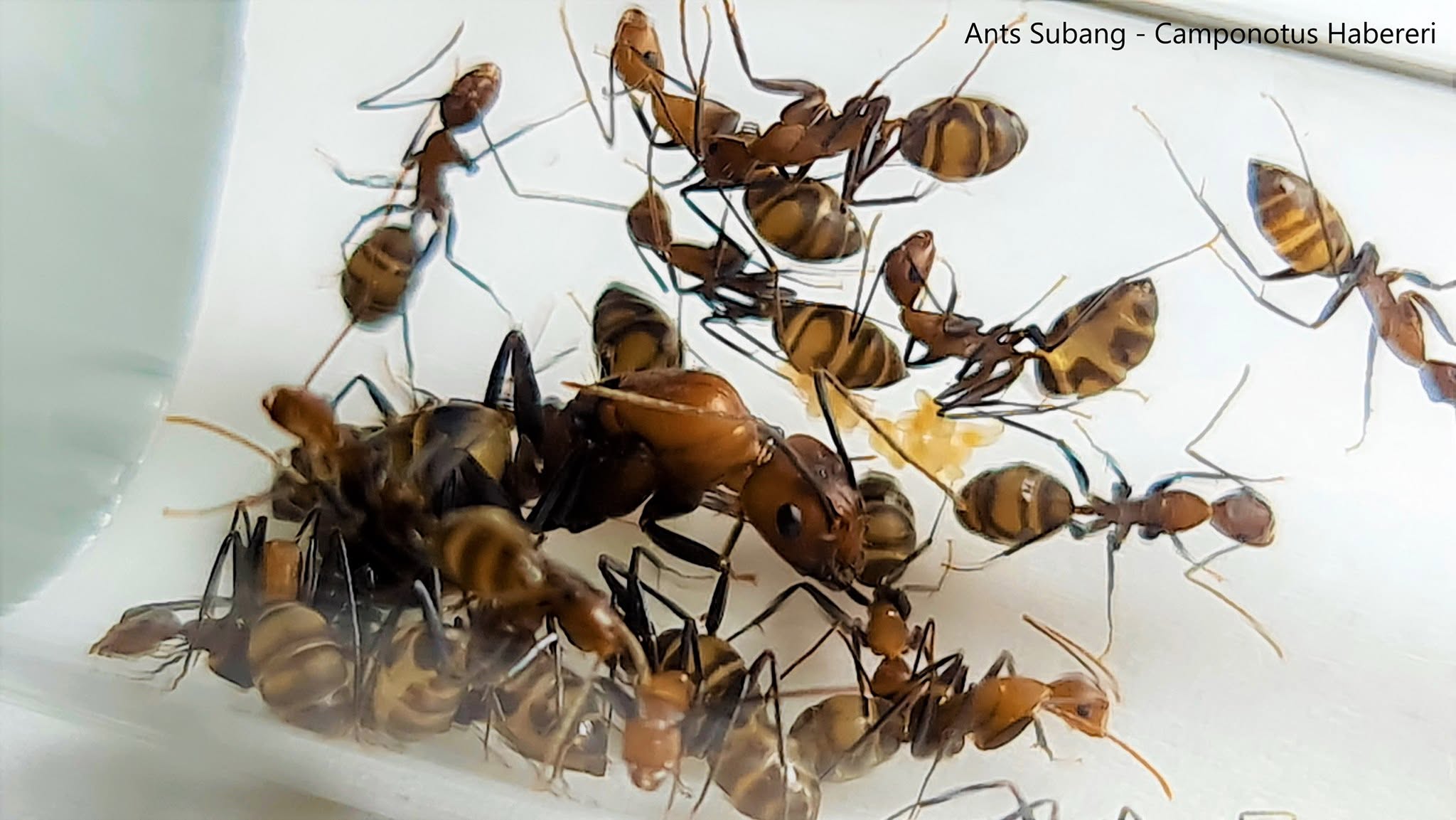
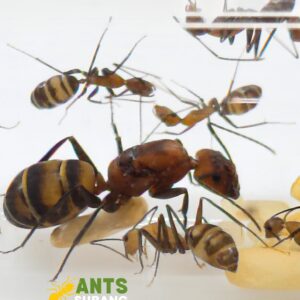
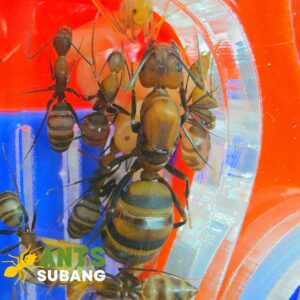
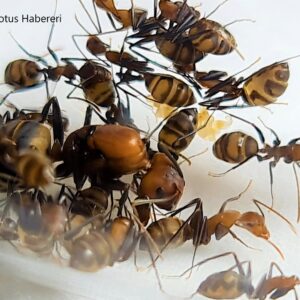
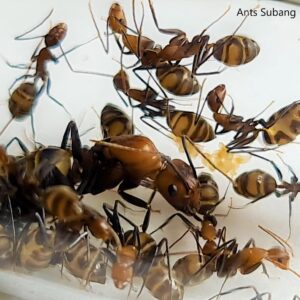
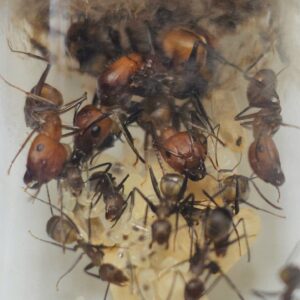
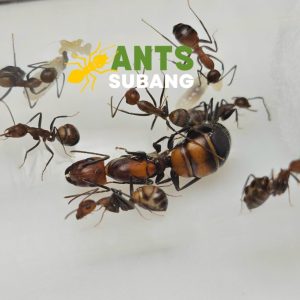
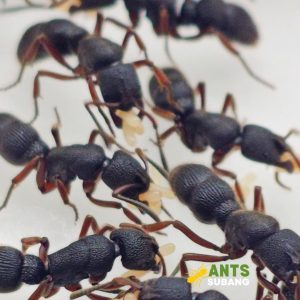
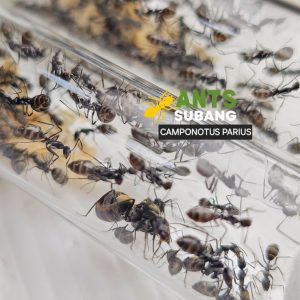
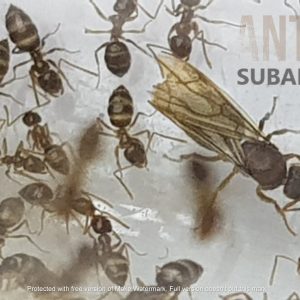
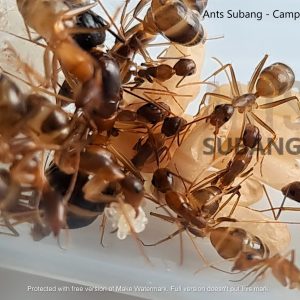
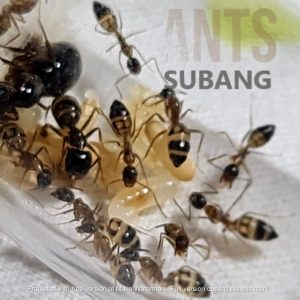
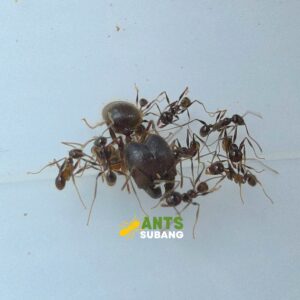
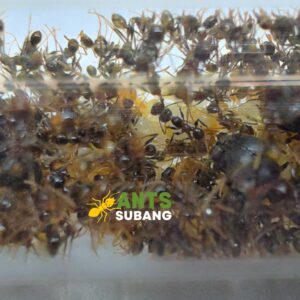
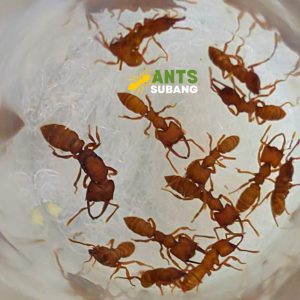
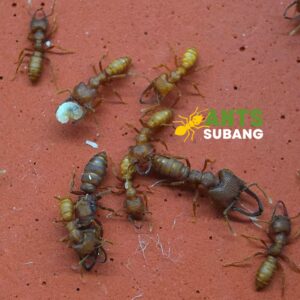
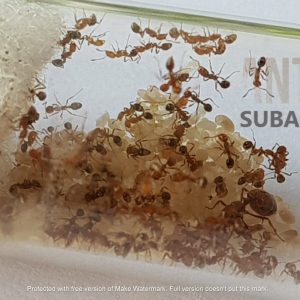
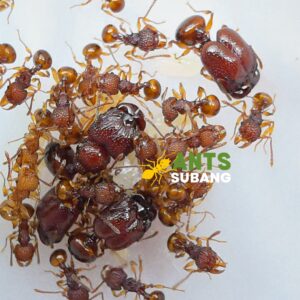
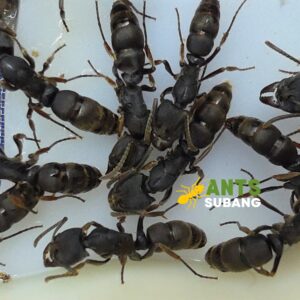
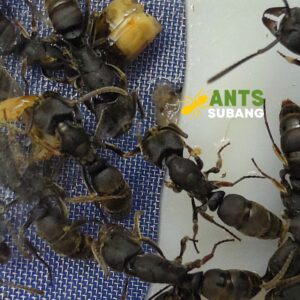
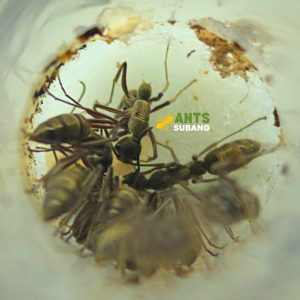
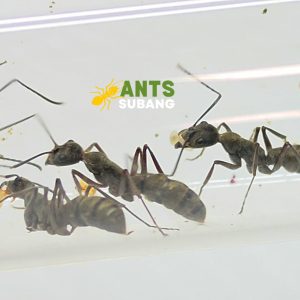
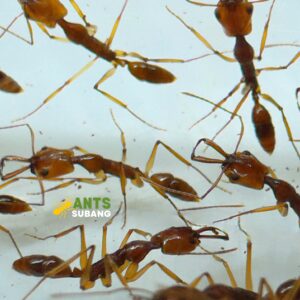
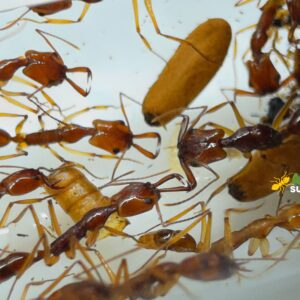
Camponotus Habereri is a medium-difficulty, visually striking Asian carpenter ant. The care consensus across sources is that they need consistent warmth (24–28°C), a relatively dry nest, and moderate humidity. There is some debate on hibernation: some keepers treat them as tropical (no diapause), while others recommend a cool rest period given their native range.
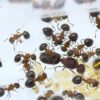
WHAT YOU WILL GET:-
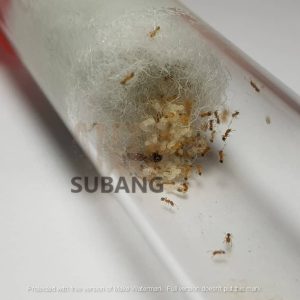
1 QUEEN + 5 TO 10 WORKERS IN A GLASS TEST TUBE
(FREE ANT FOOD)
1 QUEEN + 11 to 15 WORKERS (COMING SOON)
🐜 Colony & Species Profile
Colony Type: Monogyne (single queen). Mature colonies can reach several thousand workers, though growth is slow initially .
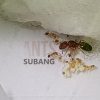
Size: Queens are roughly 14–17 mm; major workers reach 9–13 mm, minors around 7–8 mm .
Difficulty: Rated as Medium or Intermediate. They are generally calm but can be defensive near the nest .
🌡️ Temperature & Humidity
Temperature: Keep the nest area warm. Most sources suggest 24–28°C for optimal brood development .
Humidity: This is a key point of divergence. Since they nest in tree trunks in the wild, they prefer a drier nest compared to soil-nesting species . Recommended nest humidity is around 50–70%, with the outworld slightly drier at 40–60% . Avoid overly wet setups; let the nest substrate dry out between waterings .
🏠 Housing & Nesting
Setup: Plaster nests are ideal because they mimic the dry, wood-like environment they naturally seek . Acrylic nests also work . Avoid soil or heavily saturated setups.
Escape Prevention: Although they are large and less prone to escaping, they are still capable climbers. Apply anti escape in outworld as a barrier .
🍯 Diet & Feeding
They are omnivorous and thrive on a standard carpenter ant diet.
Sugars: Keep honey water, sugar water available at all times.
Protein: Offer freshly killed insects (mealworms, crickets, fruit flies, small roaches) 2–3 times per week. Remove uneaten protein after 24–48 hours to prevent mold . As the colony grows, you can offer live, disabled prey .
❄️ Diapause / Hibernation
2 Views
One view: Treat them as tropical with no hibernation. Keep them warm year-round (24–28°C) to maintain continuous growth .
Another view: Given they are native to Taiwan/Japan, some keepers provide a cooling period of 2–3 months at 10–15°C to mimic winter, which may improve long-term health and breeding . If you choose this route, reduce feeding and keep the nest dry during the cool period.
⚠️ Key Care Notes
Avoid Overheating: Do not let the nest exceed 30°C, as they may become stressed or passive .
Patience with Founding: The initial founding phase can be slow. Queens may take weeks to produce the first workers (roughly 6–10 weeks depending on temperature


Reviews
There are no reviews yet.