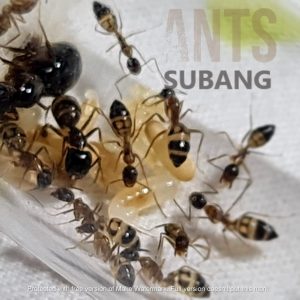
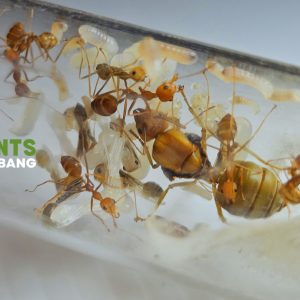
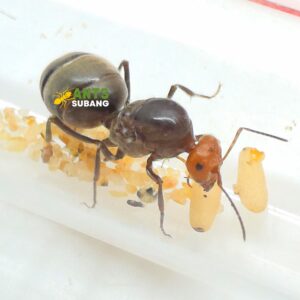
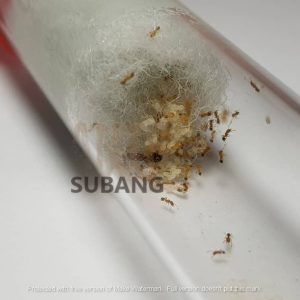
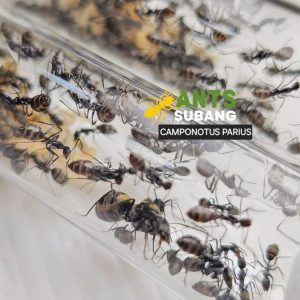
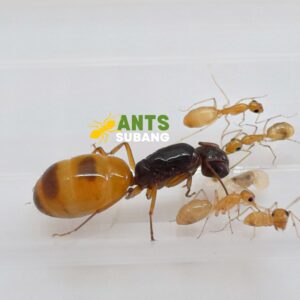
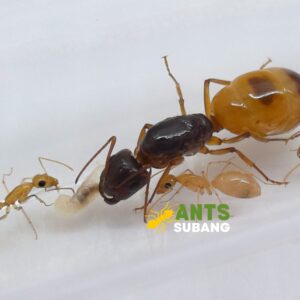
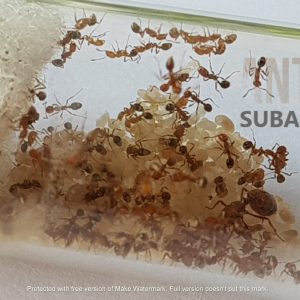
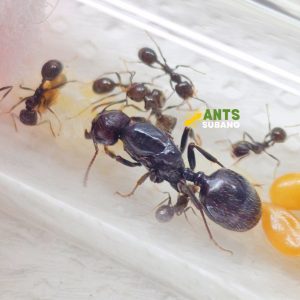
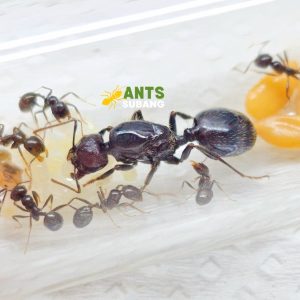
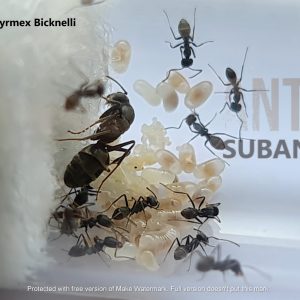
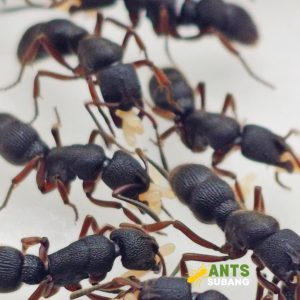
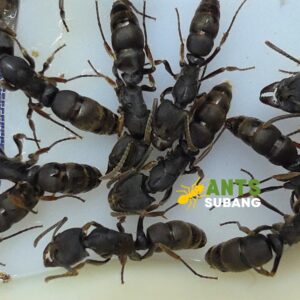
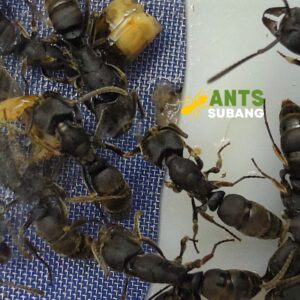
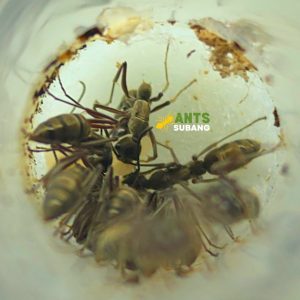
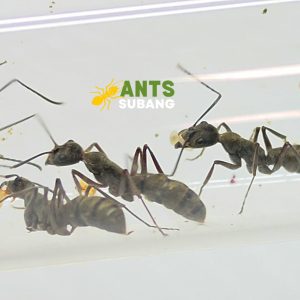
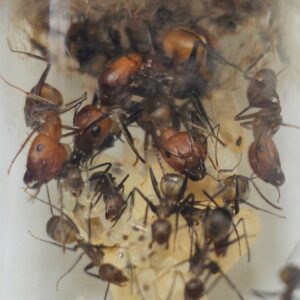
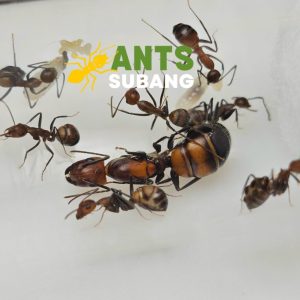
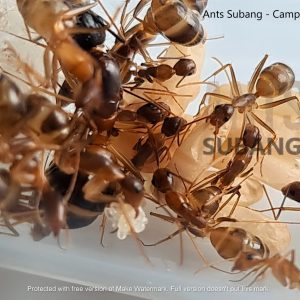
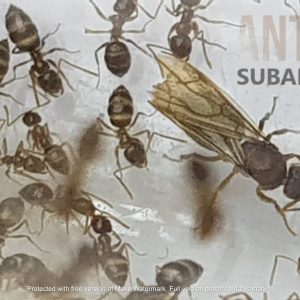
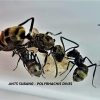
Camponotus Albosparsus, also known as the Yellow-spotted Sugar Ant, is a fantastic choice for both beginners and experienced ant keepers. They are known for their distinctive appearance, active nature, and forgiving care requirements.
Here is a comprehensive care sheet for this stunning species.
1. Difficulty Level
Very Easy. They have a wide tolerance for temperature and humidity, are not picky eaters, and are very resilient, making them one of the best species for beginners.
2. General Information
Scientific Name: Camponotus albosparsus
Common Name: Yellow-spotted Sugar Ant
Distribution: Southeast Asia, including parts of China, India, Japan, and Taiwan
Colony Structure: Monogynous (one queen per colony)
Queen Size: 9 – 12 mm
Worker Size: 5 – 8 mm (Polymorphic – minor, media, major)
Colony Size: Can reach up to 1,000 – 10,000 workers at maturity
3. Housing & Setup
Nest Type: They are adaptable and will nest in a variety of materials, including plaster, ytong (aerated concrete), acrylic, and 3D-printed nests. A test tube setup is perfect for a founding colony.
Recommended Transition: It’s best to keep a new colony in a test tube until they have at least 10 to 15 workers before moving them to a larger formicarium. This helps them feel secure and comfortable.
Escape Prevention: This species is known to be very fast and agile, so a reliable escape barrier on the top edges of the outworld is essential to prevent escapes.
4. Environmental Conditions
Temperature: They are tropical and require warmth.
Optimal Range: 25 – 28°C.
Safe Range: 25 – 30°C.
Humidity: They prefer a humid environment. A humidity gradient in the nest is recommended.
Nest Humidity: 60 – 80%.
Key Tip: Always provide a constant source of fresh water (like a test tube or water tower in the outworld).
Hibernation: No. As a tropical species, they do not require diapause and will remain active year-round under proper conditions.
5. Feeding & Nutrition
Carbohydrates (Energy): Provide sugar water, honey water, or fruits. They have a particular fondness for sugars.
Proteins (Growth): Feed a variety of insects like fruit flies, crickets, mealworms, roaches (e.g., dubia roaches), and buffalo worms.
Feeding Frequency:
For optimal growth, feed protein 2-4 times a week and ensure carbohydrates are constantly available.
Feeding Tips:
Use sterile insects when possible. If collecting from the wild, freeze or boil them to kill any potential parasites or mites.
Remove uneaten food after 24 hours to prevent mold.
6. Development & Growth
Founding Type: Claustral (The queen raises the first generation of workers using her own energy reserves).
Growth Rate: They are known for a rapid growth rate. A small colony can grow to 1,000 workers relatively quickly under optimal conditions. A young colony might raise 20-40 workers in half year.
7. Temperament & Behavior
Defense: They defend themselves with strong mandibles and by spraying formic acid.
Activity: They are fast-moving, active foragers that are mostly active during the day but can also be nocturnal.
Colony Personality: Young colonies are timid and shy, but as the colony grows, they become more aggressive and will readily defend their territory.
Foraging: They are ground-dwelling ants that forage primarily on the ground but may also climb vegetation. Their gaster (abdomen) is often held in a raised position when they walk, resembling an acrobat ant.
8. Summary
Camponotus albosparsus is a highly recommended ant for anyone from beginners to seasoned hobbyists. Their beautiful coloration, fast growth, and forgiving nature make them an incredibly rewarding species to keep and observe. Their active and bold behavior as a mature colony is a highlight for any ant keeper.


Reviews
There are no reviews yet.