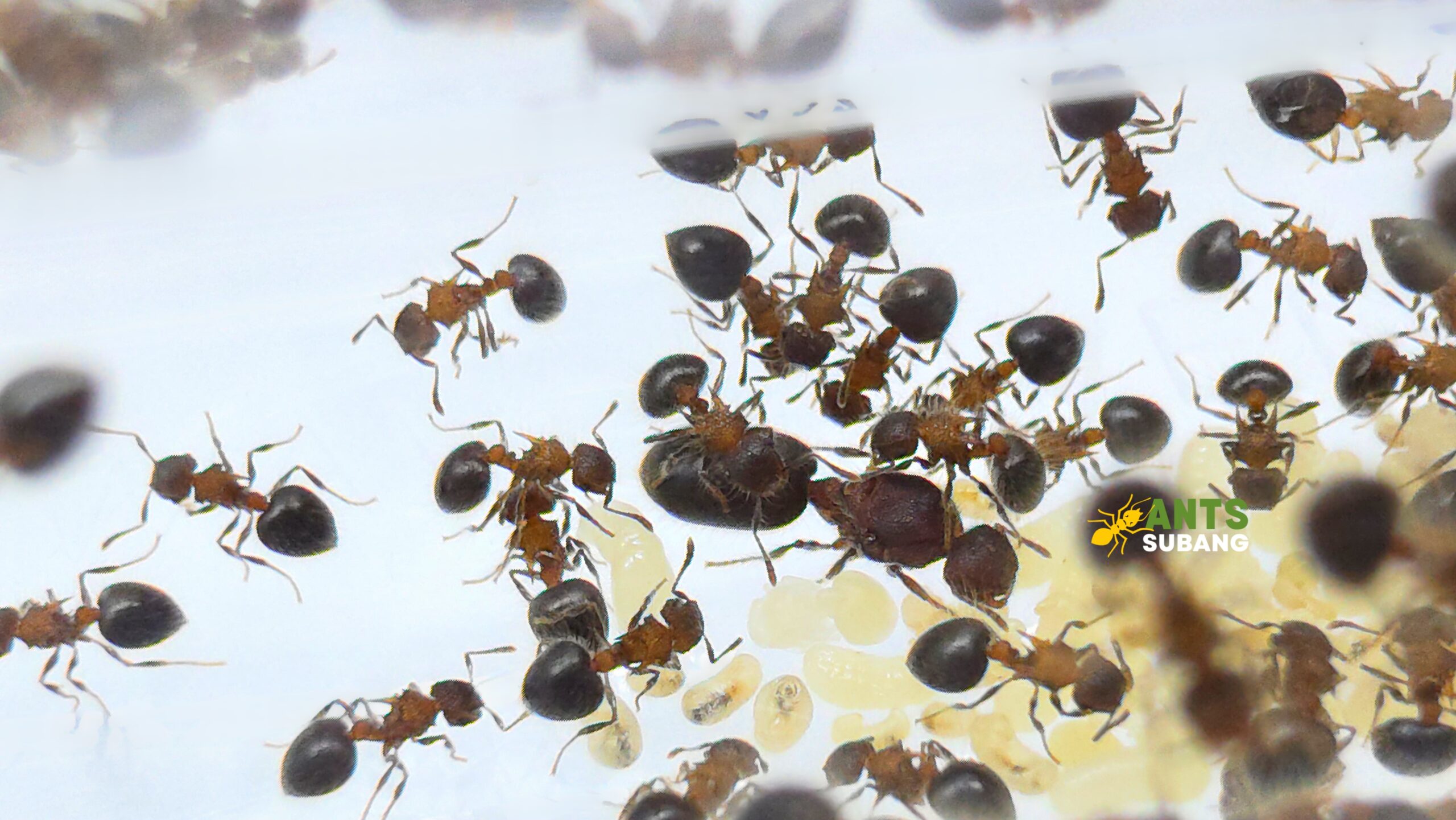
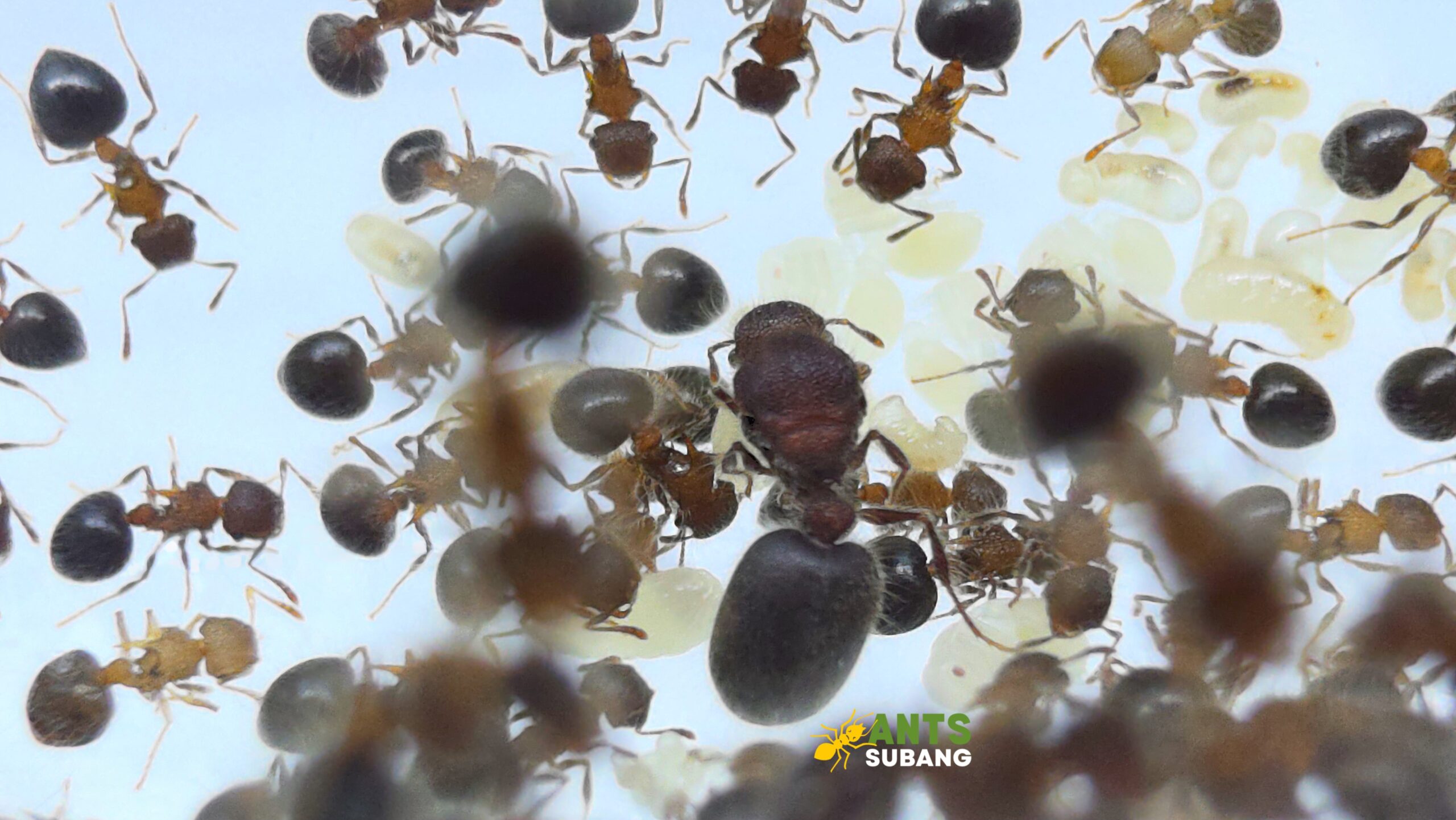
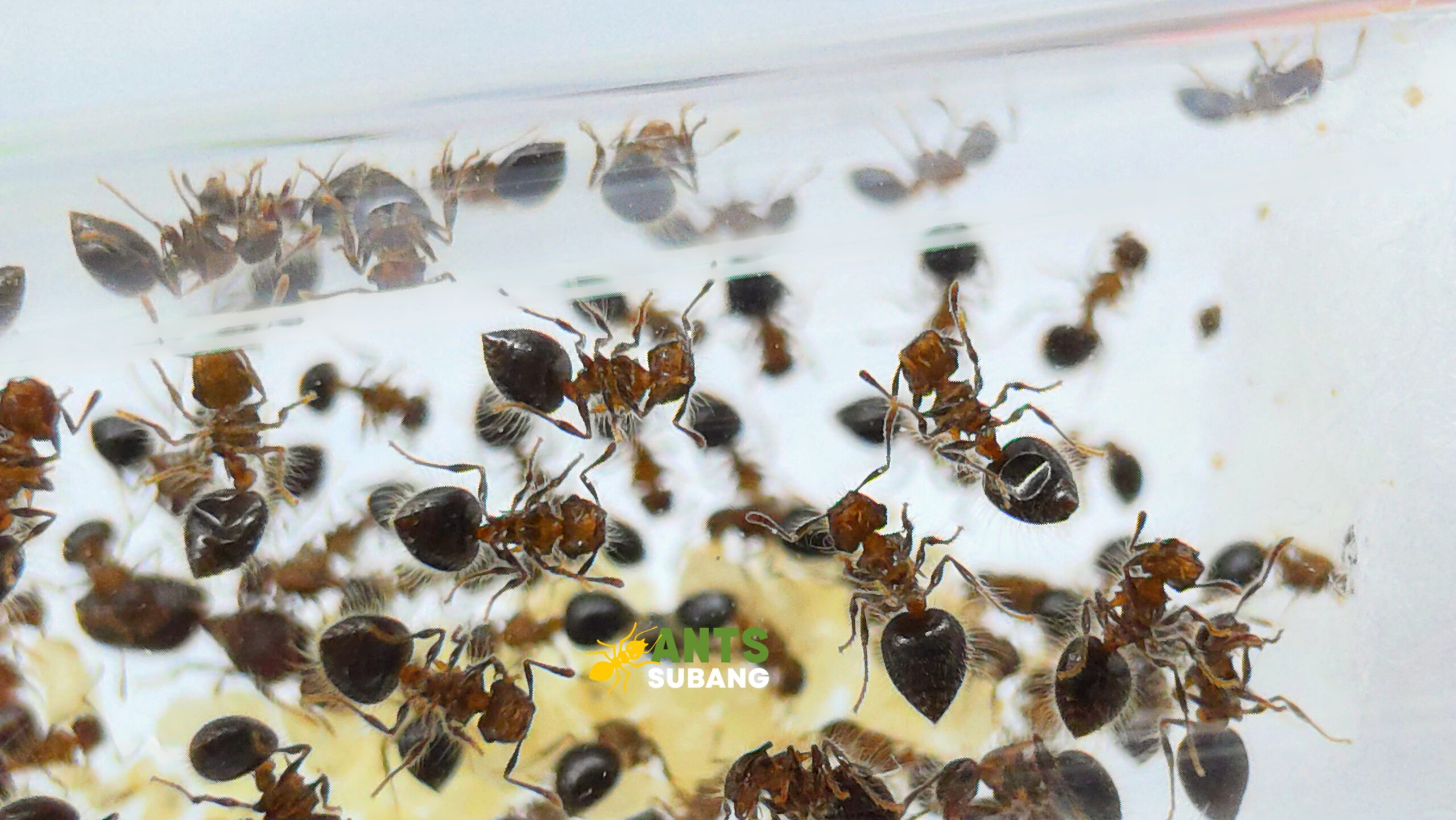
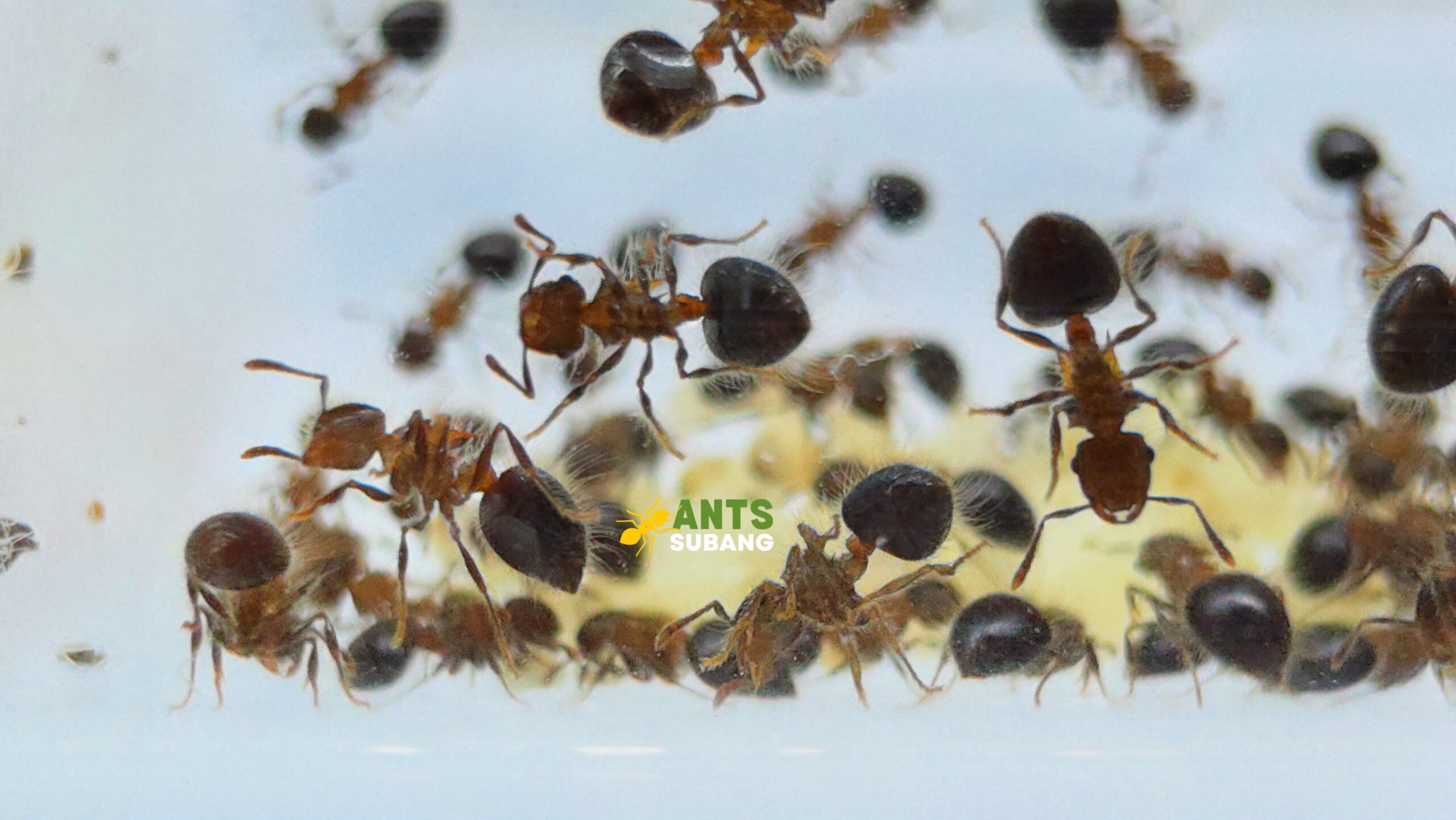
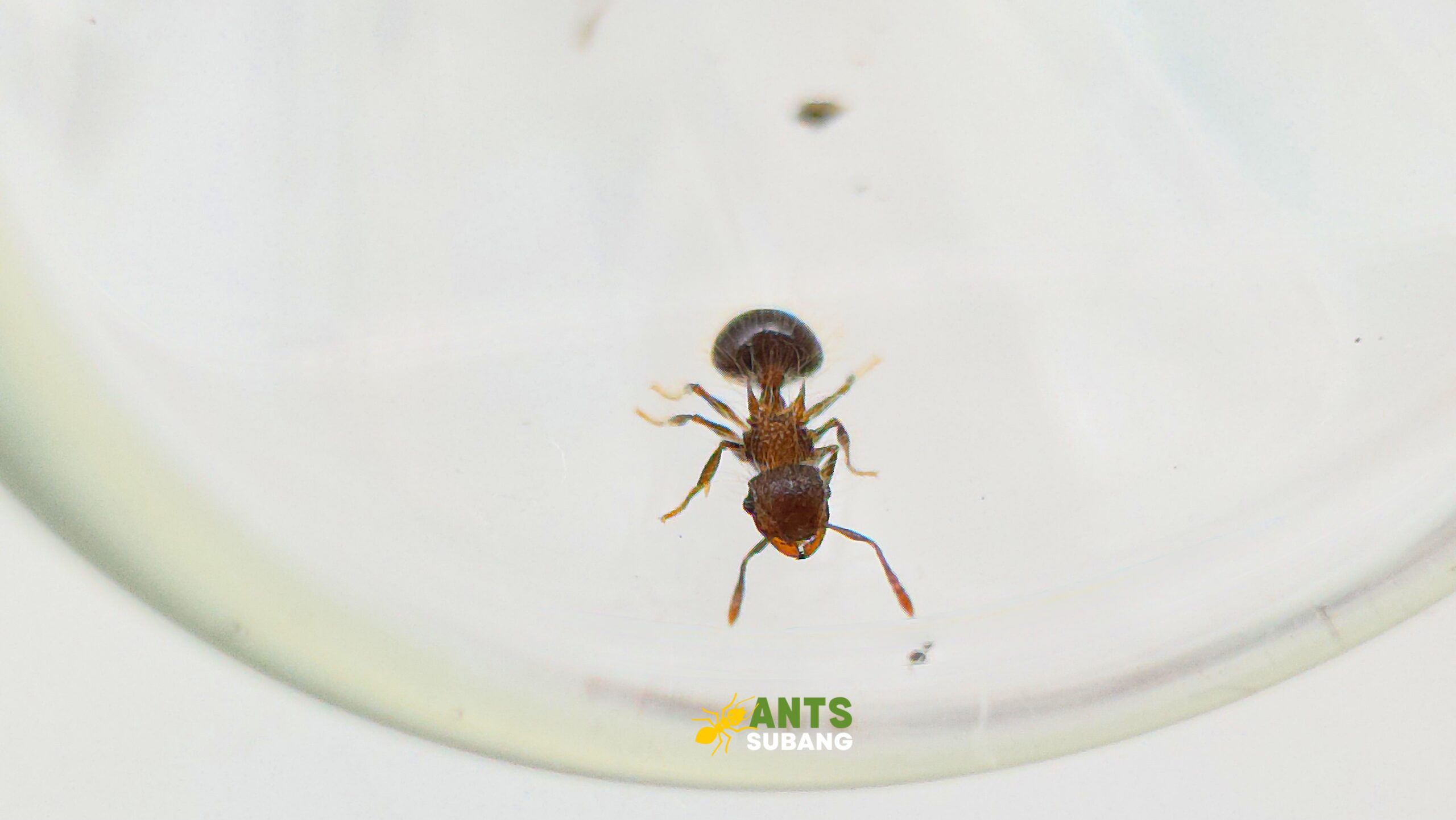
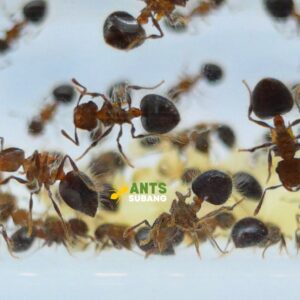
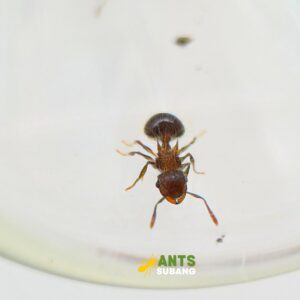
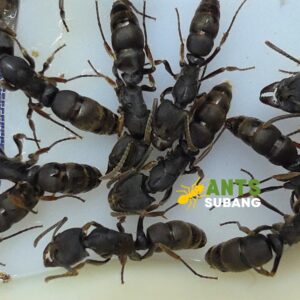
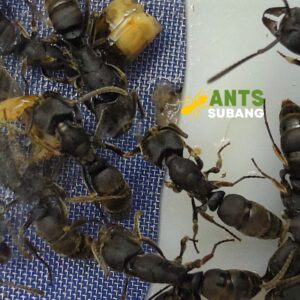
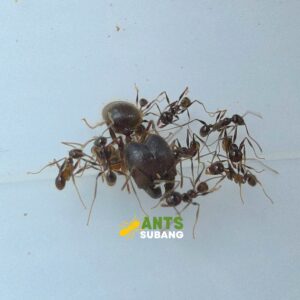
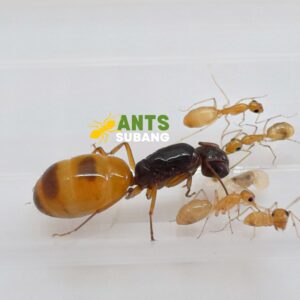
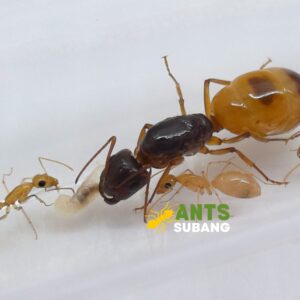
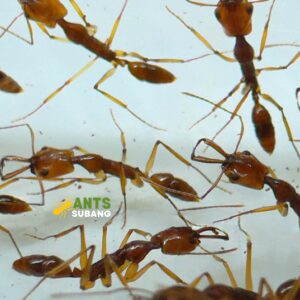
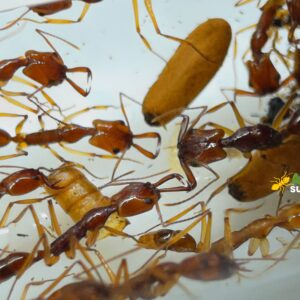
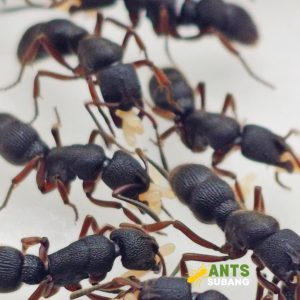
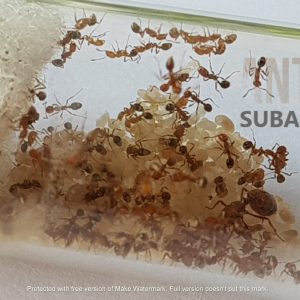
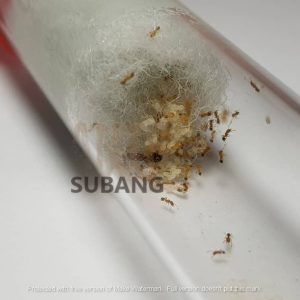
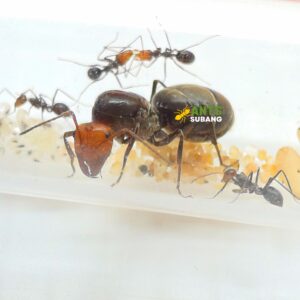
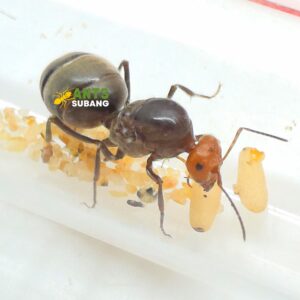
Meranoplus bicolor, often called the bicolored shield ant, is a visually striking and calm species from South and Southeast Asia. Its most distinctive traits are its heavily armored, shield-like thorax and its habit of playing dead when disturbed.
WHAT YOU WILL GET:-
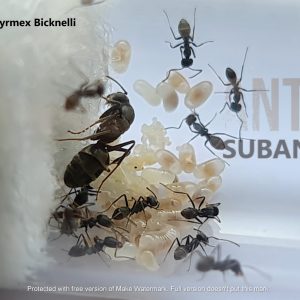
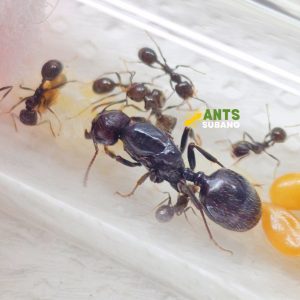
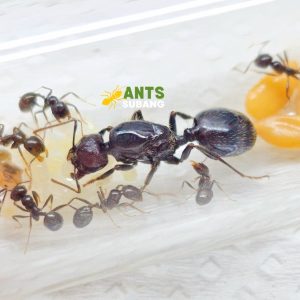
1 QUEEN + 15 TO 20 WORKERS OR
1 QUEEN + 21 TO 30 WORKERS OR
1 QUEEN + 31 TO 40 WORKERS
🐜 At a Glance
Difficulty: Easy to Intermediate. Slow-growing and calm, but the founding queen needs feeding, and colonies take years to mature.
Colony Size: Generally 1,000 to 3,000 workers, with some sources citing up to 5,000. Growth is slow, taking about 4 years to reach maturity.
Queen Size: 8-9 mm. Worker Size: 3-5 mm.
Temperature: 24-28°C. Being tropical, they need warmth and no hibernation.
Humidity: 50-70% in the nest. They need a moist substrate but a dry retreat to prevent mold.
🏠 Housing and Nest Setup
Naturalistic Setup: A terrarium with a 1-2 inch layer of damp soil, mixed with sand and leaf litter, is ideal. Add small stones or bark for hiding spots.
Artificial Nests: (AAC) or plaster nests work well. Provide a humidity gradient with one side moist and one side drier to prevent mold.
Outworld: They are clumsy climbers and struggle with smooth glass or acrylic. A lid is often cosmetic, but use a Anti Escape barrier as cheap insurance.
Escape Prevention: While clumsy, they are small. Ensure all joints connections are secure.
🌡️ Climate and Temperature
Warmth: Keep the nest at 25-28°C.
Humidity: Maintain nest humidity around 50-70%. The substrate should be consistently moist but never waterlogged. Mist every few days.
🍽️ Feeding and Diet
Protein: Offer 2-3 times per week. They prefer fruit flies, small crickets, or mealworms. Remove leftovers after 24 hours.
Sugars: Keep a constant source of sugar water, honey, or ant jelly. They have a “sweet tooth” and tend aphids for honeydew in the wild.
Seeds: They will accept soft seeds like poppy or chia as they are seed harvesters in the wild.
Founding Queen: If starting with a queen, she needs tiny protein meals and sugar droplets placed close to her tube until the first workers arrive.
🐜 Behavior and Handling
“Playing Dead”: When threatened, workers roll into a ball and play dead rather than fleeing or stinging. This is a distinctive and fascinating behavior.
Calm and Slow: They are very timid and move slowly. They are not aggressive and are vulnerable to harassment by faster, more aggressive ant species.
Defense: Their primary defense is toxic body hairs that cause predators to release them. They rarely use their stinger.
Activity: Workers forage on the ground both day and night.
⚠️ Common Issues to Watch For
Slow Growth: Colonies take about 4 years to reach maturity. Beginners may lose patience.
Fragile Founding: Founding queens are sensitive to disturbance. Ensure they have food but minimize handling.
Mold: They are prone to mold if kept constantly damp. Always provide a dry retreat area or humidity gradient.
Move Reluctance: They are notoriously stubborn about moving nests. If you need them to relocate, patience and strategic light/heat gradients may be necessary, as force can cause stress-related deaths.
🐣 Founding and Colony Growth
Claustral Founding: The queen founds the colony alone but needs food during this period.
First Workers (Nanitics): They are smaller than normal workers and emerge after 6-10 weeks.
Monogyne: Strictly one queen per colony. Extra queens are killed by workers.
Temperature for Founding: Keep the founding tube warm (around 25-28°C) and in the dark to reduce stress.
💡 Practical Tips for Success
Start Small: Use a compact nest for the founding colony so the few workers are not lost in a large space.
Seed Variety: Offer a mix of small seeds and insect prey to mimic their natural scavenging and seed-harvesting diet.
Patience is Key: This is a “hands-off” species. Enjoy their deliberate movements and unique appearance, but avoid frequent disturbances.
Avoid Aggressive Tank Mates: Do not house them with fast or aggressive ants; they will be outcompeted and stressed.
In summary, Meranoplus bicolor is a rewarding species for keepers who appreciate calm, slow-moving, and visually fascinating ants. Their “shield” and play-dead behavior make them unique, but their slow growth and specific humidity needs require some patience and attention to detail.


Reviews
There are no reviews yet.