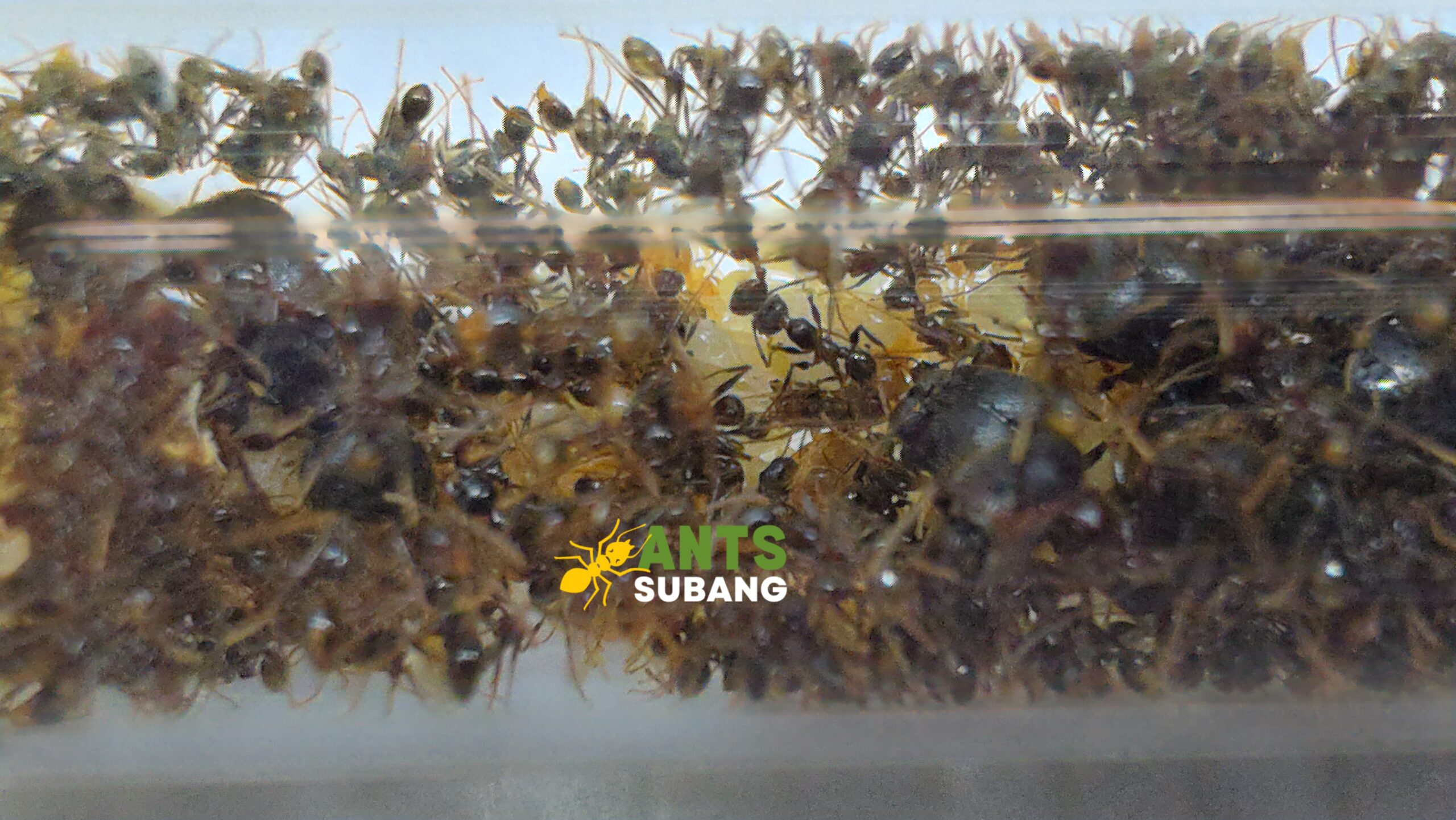
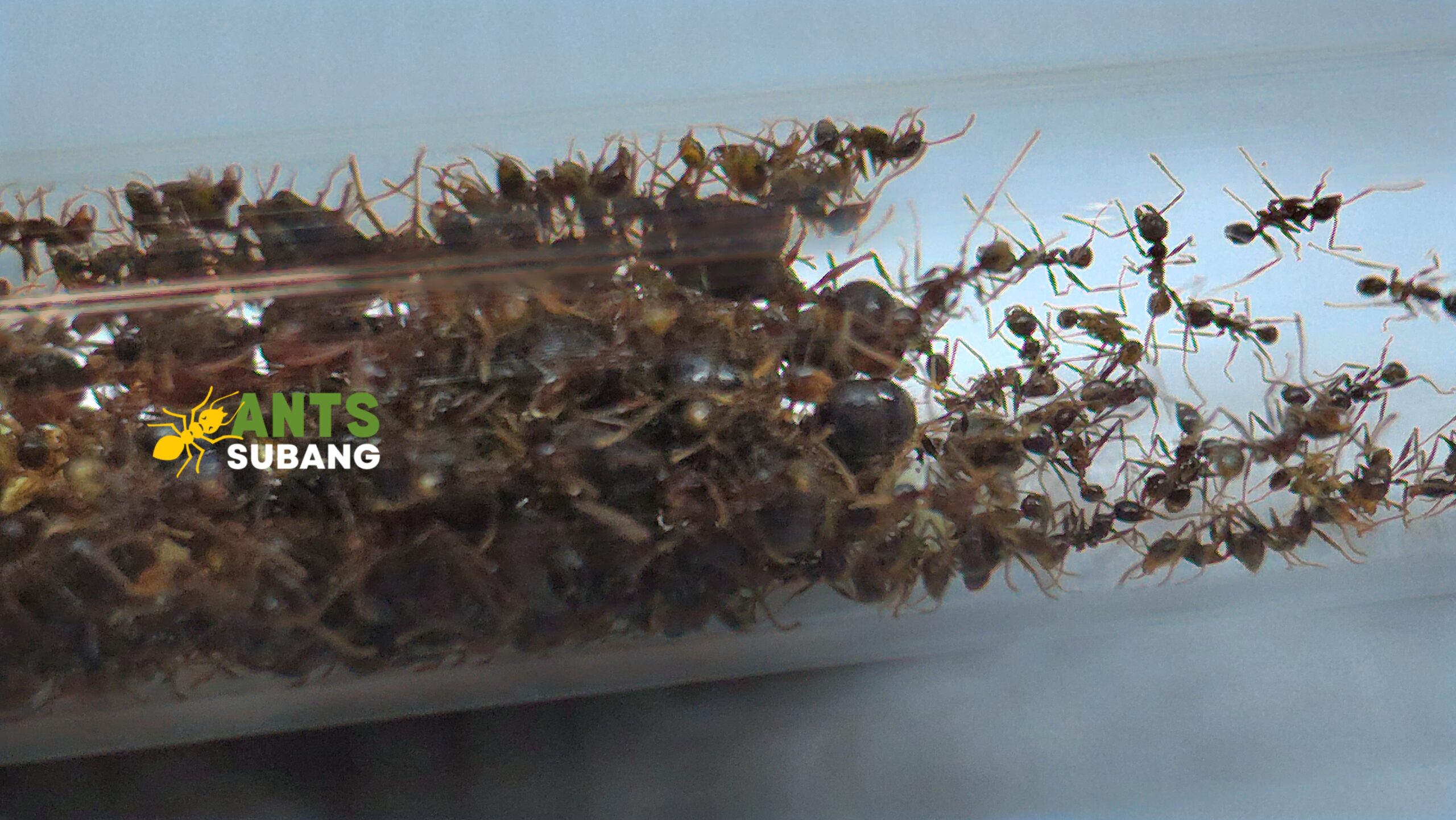
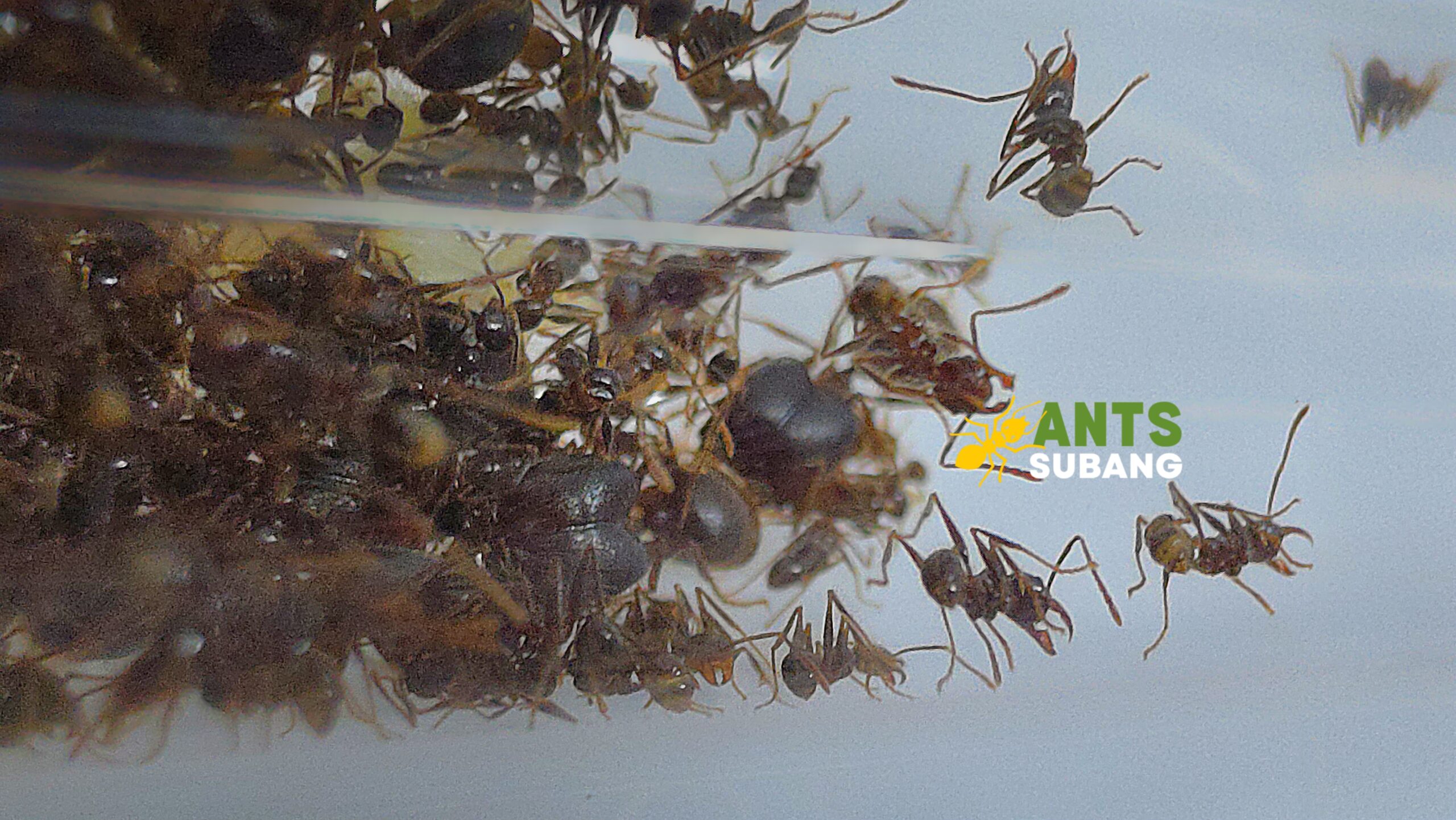
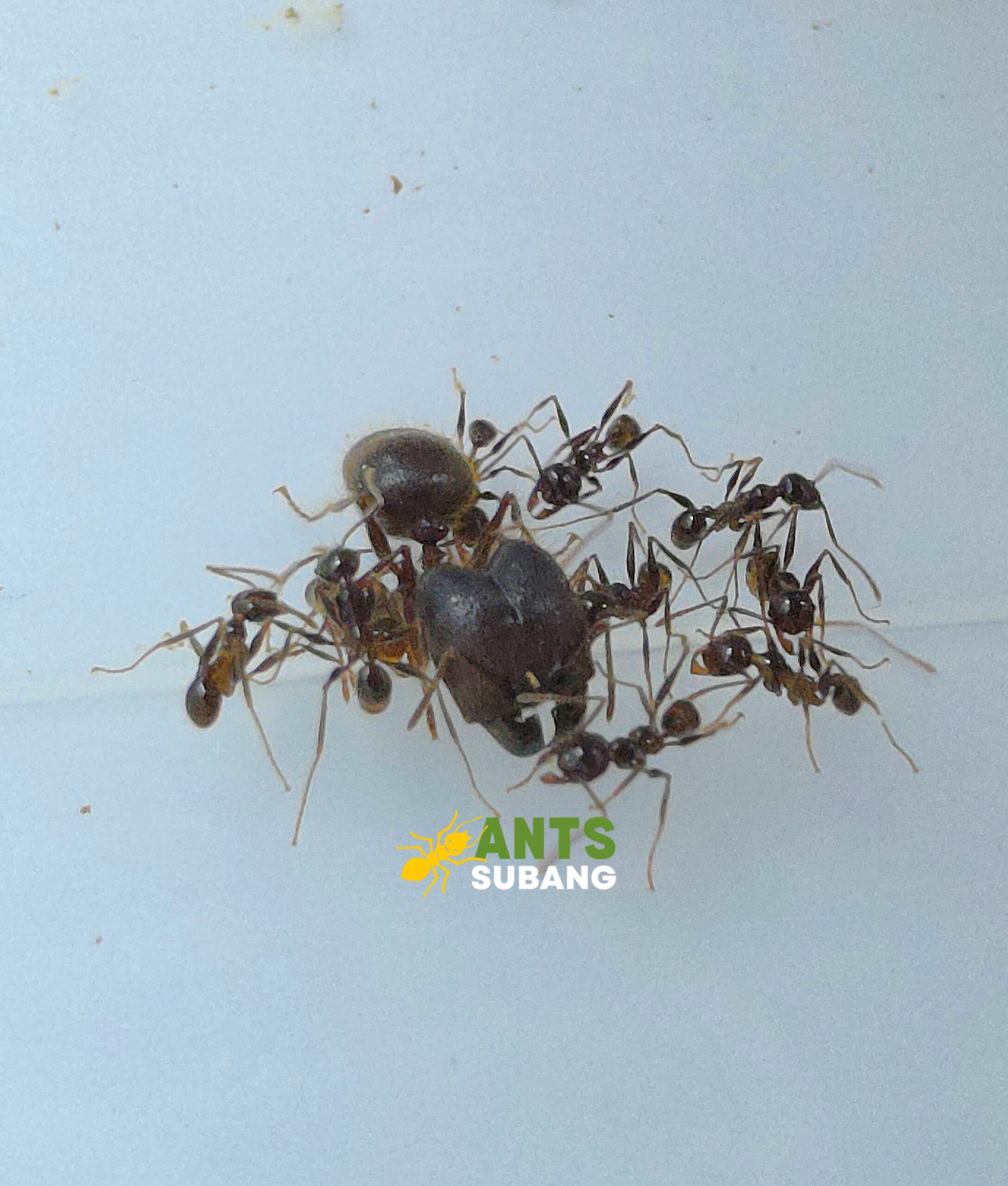
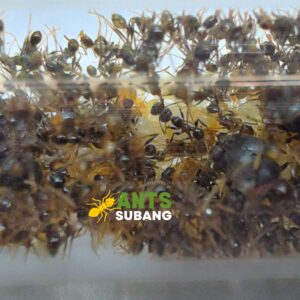
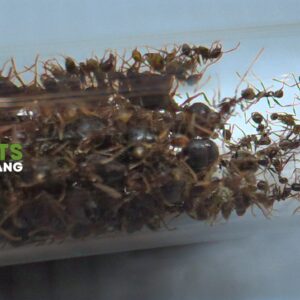
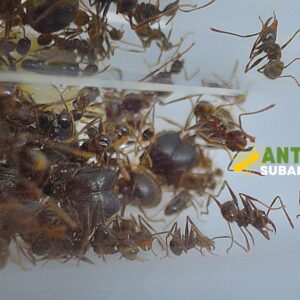
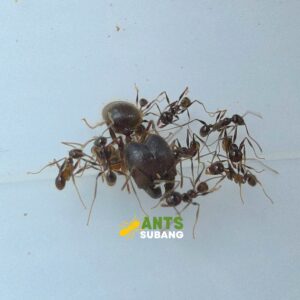
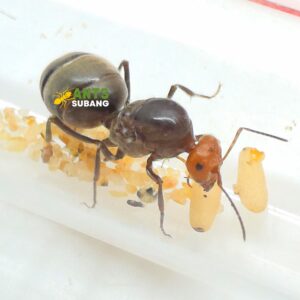
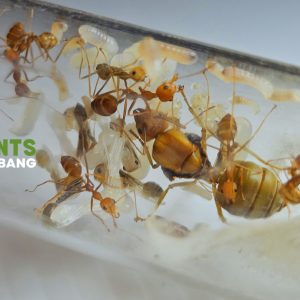
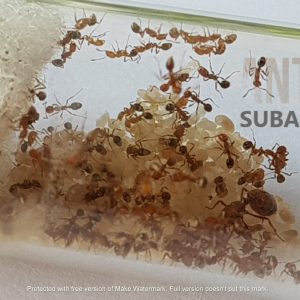
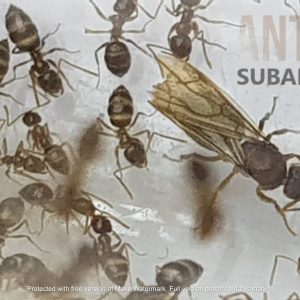
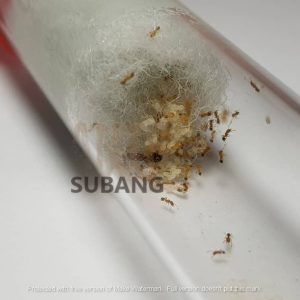
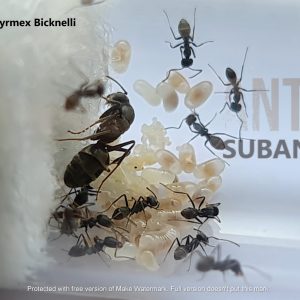
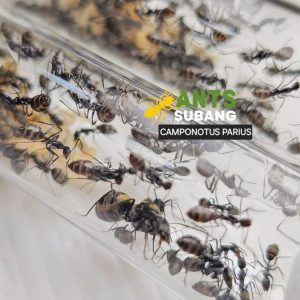
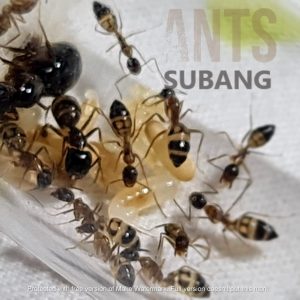
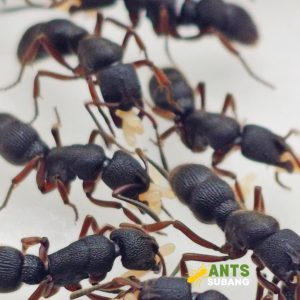
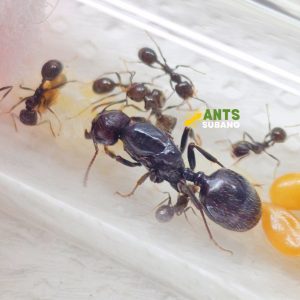
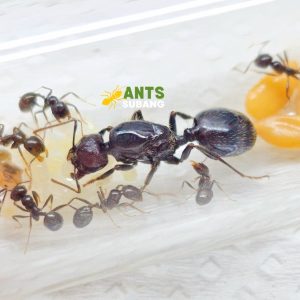
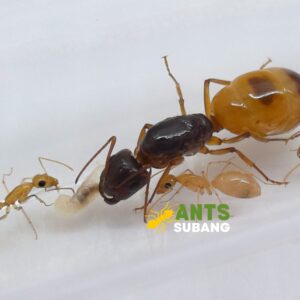
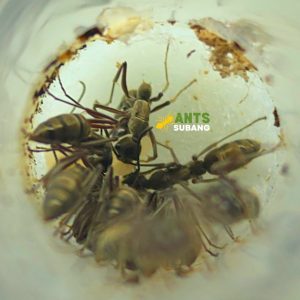
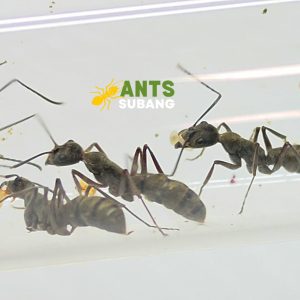
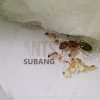
GIANT PHEIDOLE ANT (COULD BE PHEIDOLE SMYTHIESII ?) is a moisture-loving, soil-nesting species, high humidity and a cool winter rest, making it a good choice for intermediate keepers. They are notable for their active tending of aphid colonies and their relatively large, black-headed soldiers.
WHAT YOU WILL GET:-
1 QUEEN AND 50 TO 100 WORKERS COLONY AND MAJOR WORKERS
IN TEST TUBE SETUP
📋 Quick Species Overview
| Attribute | Detail |
|---|---|
| Difficulty | Easy to Intermediate; sensitive to dry conditions |
| Origin | Malaysia, Thailand, Vietnam, South China |
| Colony Type | Monogyne (single queen) |
| Queen Size | 12 – 13 mm |
| Worker Size | 4 – 5 mm (Minor workers), 7 – 9 mm (Soldiers/Majors) |
| Colony Size | Mature colonies can reach several thousand workers |
| Growth Rate | Moderate; first workers in roughly 6-8 weeks |
| Hibernation | No |
🏠 Housing and Nest Setup
This is a soil-nesting species that requires consistently high moisture, especially in the nest area .
Founding: A standard test tube setup is ideal for the claustral founding queen .
Nest Type: Soil-based nests are suitable. For this species, plaster nests are highly recommended because they hold moisture exceptionally well .
Humidity: This is critical. Keep the nest substrate consistently moist but not waterlogged. Aim for 60-80% humidity in the nest and 60-70% in the outworld . They originate from humid forest floors and do not tolerate dry air in their living chambers .
Escape Prevention: This is non-negotiable. The minor workers are tiny and are described as masters of escape. Use a good anti escape barrier around the outworld.
🌡️ Temperature and Seasonal Care
Optimal Range: Keep the nest at 26-27°C
🍽️ Diet and Feeding
They are omnivorous
Sugars (Primary): In the wild, they feed heavily on honeydew from aphids . In captivity, offer sugar water or honey water constantly .
Protein: Offer small insects like fruit flies, small crickets, or mealworms 2-3 times per week . The large-headed soldiers are efficient at processing prey .
Seeds: They will also accept small seeds like sesame, amaranth, and millet .
Hygiene: Remove uneaten prey promptly to prevent mold, especially in the humid nest environment .
🐜 Colony Development and Behavior
Founding: The queen is claustral and raises her first brood without foraging .
Castes: They have a dimorphic worker caste. You will see minor workers (small) for foraging and brood care, and soldier/major workers (large, with disproportionately big heads) for defense and cracking seeds .
Behavior: Workers are active foragers with seasonal variation in activity . They are not overly aggressive but are highly efficient hunters and tenders of aphids .
⚠️ Common Issues and Pitfalls
Escape: The tiny minor workers can slip through the smallest gaps. Inspect your formicarium for any openings before introducing the colony .
Dry Conditions: This is a high-humidity species. Dry nest chambers can quickly lead to colony decline .
Mold: Because of the high humidity required, overfeeding or not removing waste can lead to mold, which is dangerous in a moist nest .
💎 Summary
This Pheidole Species is a rewarding species for a keeper who can provide a consistently humid nest and a proper cool winter rest. The primary keys to success are maintaining high nest humidity and preventing escapes due to their tiny minor workers.


Reviews
There are no reviews yet.