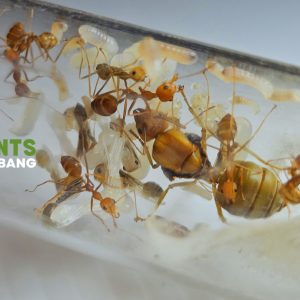
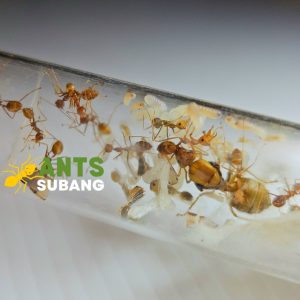
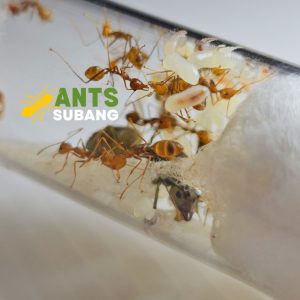
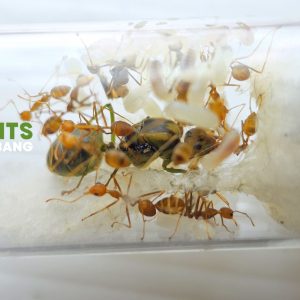
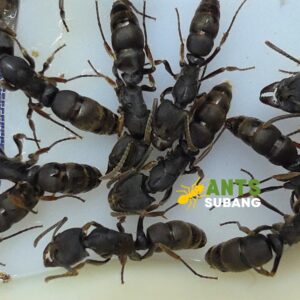
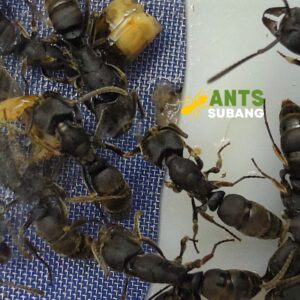
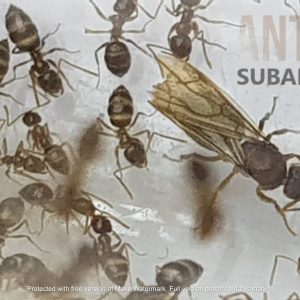
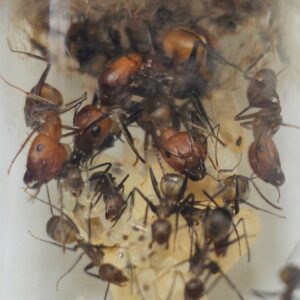
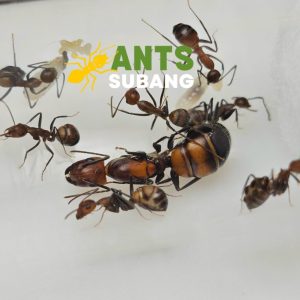
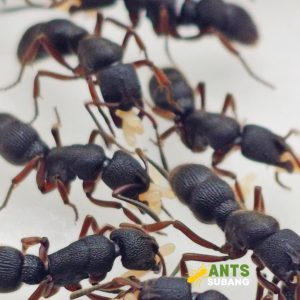
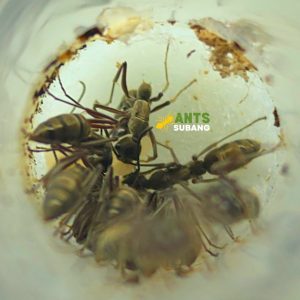
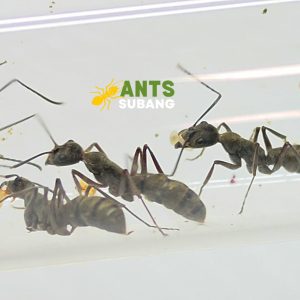
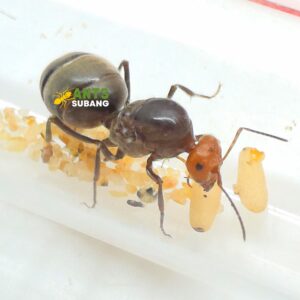
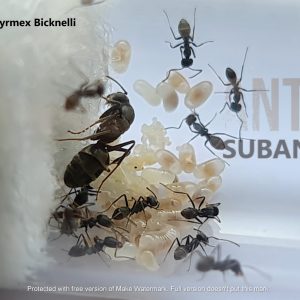
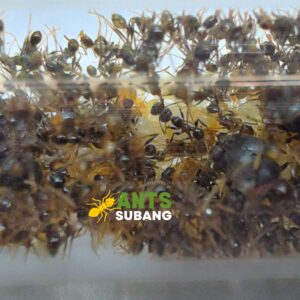
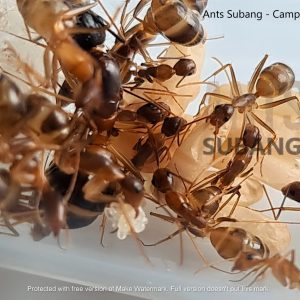
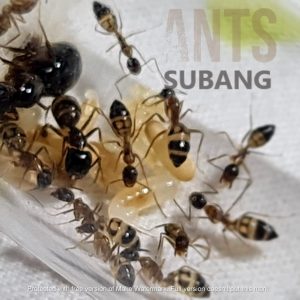
Oecophylla smaragdina (Asian Weaver Ant)
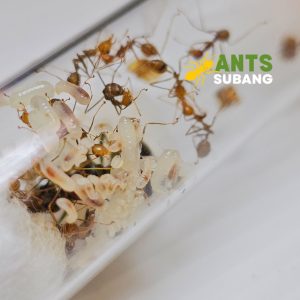
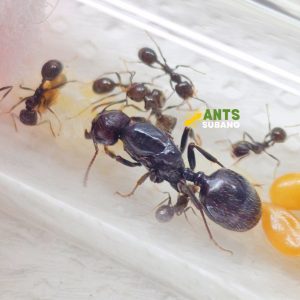
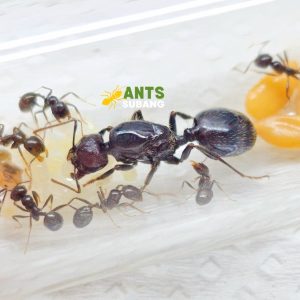
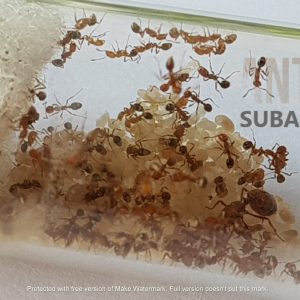
Weaver ants also known as kerenga are found throughout the Asian tropics mainly on trees weaved in leaves is their nest. They spray Formic Acid and have a hefty bite. They also feel as if they have velcro on their feet, they are very sticky and difficult to remove. Weaver Ants are so-called due to their habit of stitching leaves together with silk produced by their larvae. They are voracious hunters.
| Attribute | Detail |
|---|---|
| Scientific Name | Oecophylla smaragdina |
| Difficulty | Advanced (4/5) |
| Queen Size | 16 – 22 mm |
| Worker Size | 6 – 14 mm (polymorphic) |
| Colony Form | Monogyne (single queen per nest) |
| Growth Rate | Moderate (3/5) |
| Hibernation | None (tropical species, active year-round) |
⚠️ Important Note: A Challenging Species
Oecophylla smaragdina is not recommended for beginners. This is a highly sensitive species with advanced care requirements. They are aggressive, have a painful bite, and spray formic acid .
🌡️ Environment & Setup
This species requires a tall, arboreal setup that mimics their natural tree canopy habitat .
Temperature: 25 – 28°C (optimal 26-27°C)
Humidity (Nest): 70 – 90%
Humidity (Arena): 50 – 70%
Recommended Setup:
A tall glass or acrylic terrarium .
A live Leafy potted plant as a centerpiece for nest building .
Substrate: Coconut humus or a mix of moss and coco fibre .
Vertical climbing materials like driftwood and sticks .
Prevention: Apply anti escape barrier or a thick layer of vaseline around the top edges to prevent escapes. Their feet have incredible grip and can cross many barriers .
Nest Type: They do not use traditional formicariums. They weave nests from leaves using larval silk, so they need a live plant or artificial leaves to construct their home .
🍽️ Feeding
They have a normal food requirement but are aggressive hunters .
Protein: Fruit flies, crickets, roaches, mealworms.
Carbohydrates: Honey water, sugar water, or specialized ant nectar
Water: Always provide fresh water, especially for the queen during founding .
🐜 Behavior & Notes
Nest Building: They do not nest underground. They weave nests by pulling leaves together and using silk produced by their larvae . A new queen will initially construct a nest of a single leaf, and nests can eventually grow to the size of a football.
Defense: They do not sting but have a powerful bite and spray formic acid, which can irritate skin .
Activity: Highly active, diurnal hunters .
Colony Size: Can reach over 100,000 workers in the wild .


Reviews
There are no reviews yet.