


Polyrhachis dives
Species Profile:
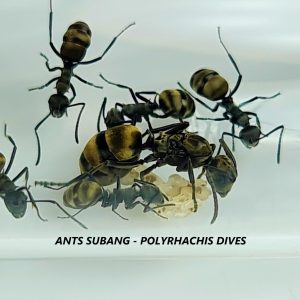
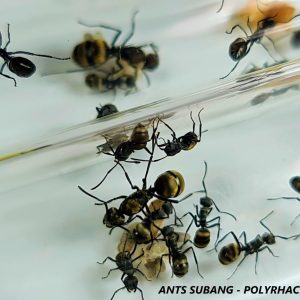
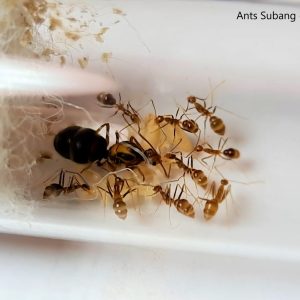
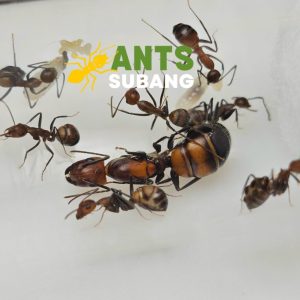
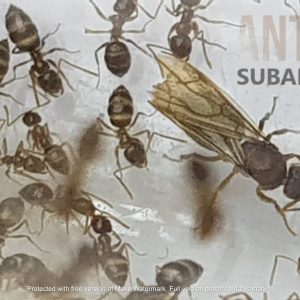
Polyrhachis dives, commonly known as the Golden Weaver Ant, is a stunning and highly rewarding species for ant keepers of all levels. Native to the tropical regions of Asia, these ants are famous for their unique nesting behavior, rapid development, and striking metallic sheen. Their activity levels and large colony sizes make them a fascinating species to observe.
General Information
-
Difficulty: Moderate
-
Distribution: Tropical Asia
-
Queen Size: ~9mm
-
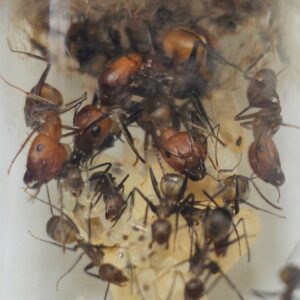
Worker Size: 5-7mm (Polymorphic, with minor and major workers)
-
Colony Structure: Polygyne (Can have multiple fertile queens)
-
Mature Colony Size: Up to 30,000+ workers
-
Nest Type: Weavers. They construct elaborate nests by sewing leaves together using silk produced by their own larvae.
-
Special Features: Intra-nidal reproduction (queens can mate and reproduce within the nest, eliminating the need for a nuptial flight), exceptional speed, and high activity levels.
What You Will Receive
Your colony will be established in a secure glass test tube setup (typically 18mm diameter, may vary).
-
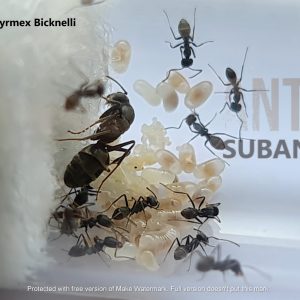
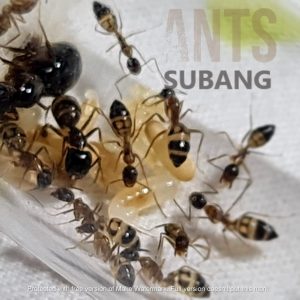
Option 1: Starter Colony – 1 Queen with 30-50 workers + Brood
-
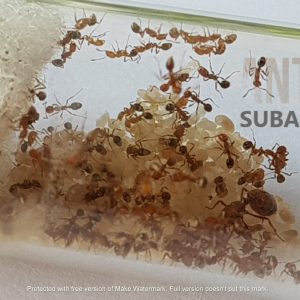
Option 2: Established Colony – 2 Queens with 50-80 workers + Brood
-
Option 3: Multi-Queen Colony – 3 Queens with 50-100 workers + Brood
(Note: Having multiple queens (polygyny) significantly boosts the colony’s growth rate and chances of long-term success.)
Maintenance & Husbandry
1. Humidity:
-
Target: 60-80%
-
Polyrhachis dives require a moderately high humidity level. The test tube setup with a water reservoir is perfect for providing this. Ensure the foraging area doesn’t become too dry.
2. Temperature:
-
Ideal Range: 20-28°C (68-82°F)
-
Optimal: 26°C (79°F)
-
Heating can be provided with a heat cable or mat placed on one side of the outworld, allowing the ants to choose their preferred temperature gradient. Avoid overheating the nest directly.
3. Diapause (Hibernation):
-
No, Diapause is not required.
-
P. dives is a tropical species and will remain active year-round. However, a natural winter cooldown to around 20°C (68°F) can be beneficial if you observe a seasonal slowdown in the queen’s egg-laying, which helps prevent “queen fatigue.”
4. Nest & Enclosure:
-
Early Stages: A glass test tube setup (as provided) is ideal for founding and early growth.
-
Established Colonies: As the colony grows, they will need space. They thrive in setups that allow for their unique nesting behavior:
-
Terrariums / Natural Setups: The best choice. Provide dried leaves, twigs, bark, and other natural debris.
-
Weaving Substrate is a MUST: These ants use their larvae to weave. You must provide them with suitable material. They will use the provided debris to construct their iconic silk nests.
-
Without Substrate: If no clean material is provided, they will unfortunately use their own waste (dead insects, discarded food) which is unhygienic. We strongly recommend always providing clean, dry wood shavings, leaf litter, or fine coconut fiber.
-
5. Diet:
-
Carbohydrates (Sugars): Provide a constant source of sugar water (e.g., honey, sugar water mixed 1:4, or specialized ant nectar). Offer this via a small dish, cotton ball, or feeder.
-
Proteins (Insects): Essential for brood development. Offer small feeder insects like fruit flies, small crickets, roach nymphs, or mealworm pieces 2-3 times per week, depending on colony size. Remove any unfinished prey to prevent mold.
6. Behavior & Observations:
-
Speed & Activity: These ants are incredibly fast and active. Ensure your outworld has a tight-fitting lid or a generous application of fluon/barrier to prevent escapes.
-
Weaving: Watching them construct their nest is the main highlight. Workers will hold larvae in their mandibles, gently squeezing them to produce silk, which they then use to bind leaves and debris together.













Reviews
There are no reviews yet.